

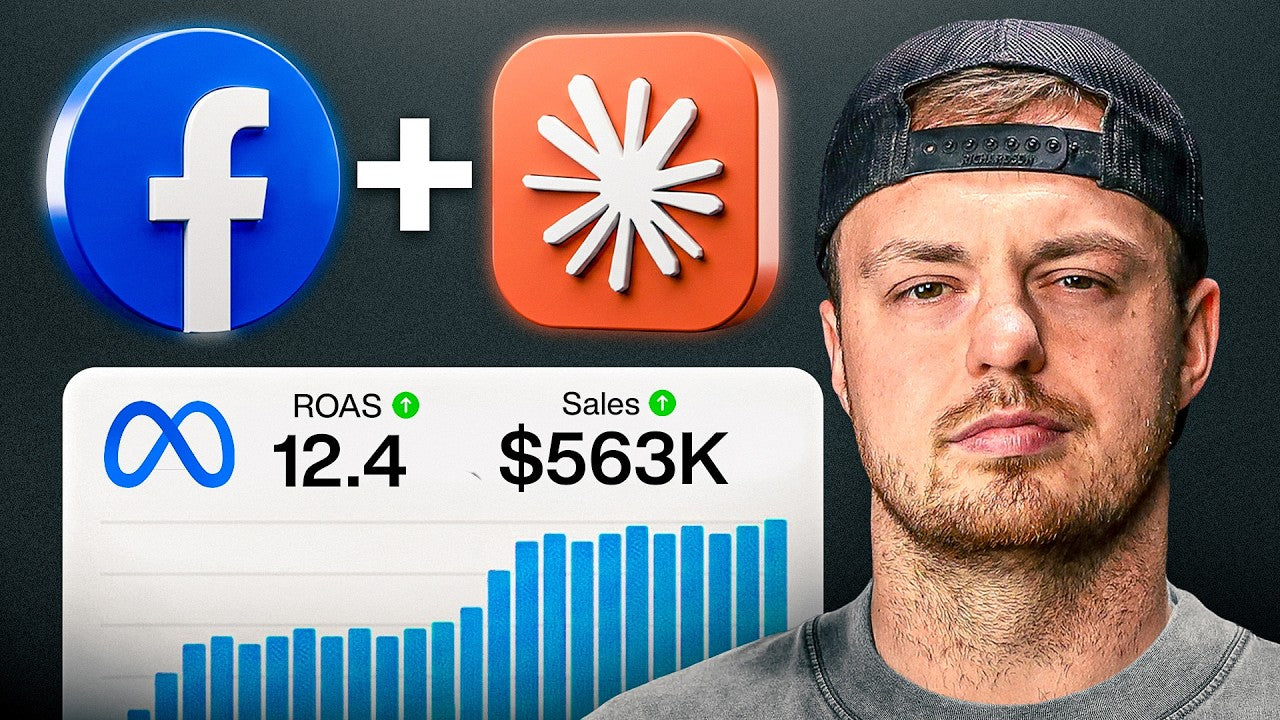
Facebook advertising for clothing brands has changed dramatically over the last few years. Strategies that worked in 2021 or even 2023 are no longer producing the same results today. Many apparel brands are still trying to scale by stacking interests, creating endless ad sets, and manually attempting to outsmart Meta’s algorithm. The result is often rising customer acquisition costs, inconsistent ROAS, poor scalability, and shrinking profit margins.
At the same time, another group of brands is quietly scaling faster than ever.
What separates them is not necessarily bigger budgets or better products. It is the quality of their inputs.
According to the transcript provided, more than 300 clothing brands generating over $100 million in revenue have used Claude-powered workflows to improve their Facebook advertising systems.
The important part is not simply “using AI.” Many brands are already experimenting with ChatGPT or Claude casually. The difference is that high-performing brands are operationalizing AI throughout their entire customer acquisition process.
They are using Claude to:
-
Build detailed customer avatars
-
Analyze customer frustrations
-
Generate ad hooks
-
Write UGC scripts
-
Create campaign briefs
-
Improve creative testing
-
Streamline Shopify workflows
-
Support TikTok Shop strategies
-
Improve AI-driven personalization
This article explains exactly how modern clothing brands are using Claude to improve Facebook advertising performance, lower acquisition costs, and scale more profitably.
Why Most Clothing Brand Facebook Ads Fail

Many apparel brands are still approaching Meta advertising with outdated strategies.
Common problems include:
-
Over-segmented audiences
-
Excessive interest stacking
-
Too many ad sets competing against each other
-
Generic creative
-
Weak messaging
-
Over-reliance on targeting hacks
-
Bid cap micromanagement
The transcript explains that Meta’s algorithm has evolved more in the last 18 months than in the previous five years combined.
This is one of the most important shifts modern ecommerce brands need to understand.
Meta no longer relies heavily on manual targeting inputs from advertisers. Today, the platform’s AI is extraordinarily sophisticated. The algorithm learns primarily through:
-
Creative engagement
-
Watch time
-
Purchase behavior
-
Comments
-
Shares
-
Saves
-
Conversion events
-
Customer quality signals
In other words, your creative itself has become the targeting mechanism.
This is why the transcript repeatedly emphasizes improving “inputs.”
Better customer understanding creates:
-
Better hooks
-
Better messaging
-
Better creatives
-
Better engagement
-
Better conversion signals
And better conversion signals improve Meta’s ability to find additional buyers.
The New Facebook Ads Framework for Clothing Brands

The transcript outlines a simple but powerful three-part framework:
-
Build the customer avatar
-
Turn the avatar into ad creative
-
Structure campaigns for scale
At first glance, this may sound basic. However, the execution underneath it is extremely sophisticated.
The brands succeeding today are not simply “running ads.” They are building integrated systems that combine:
-
Shopify data
-
AI-assisted creative production
-
Broad Meta targeting
-
AI-powered merchandising
-
Social commerce
-
AI personalization engines
The combination of these systems is what creates scalable performance.
Part 1: Use Claude to Build a Detailed Customer Avatar

One of the biggest mistakes clothing brands make is defining their audience too broadly.
Most brands describe their customer using generic labels like:
-
“Streetwear enthusiasts”
-
“Gym people”
-
“Fashion-conscious women”
-
“Athletes”
-
“Runners”
That level of targeting is far too shallow for modern Facebook advertising.
The transcript demonstrates this using an example high-end running apparel brand. The founder explains that the brand solves specific problems:
-
Chafing during long-distance runs
-
Excessive sweat retention
-
Odor buildup
-
Low-quality synthetic materials
-
Poor-looking performance apparel
Notice how specific these frustrations are.
This is not just “activewear.” It is identity-driven positioning for serious endurance runners.
Claude then asks deeper questions such as:
-
How do these runners feel emotionally?
-
What frustrates them about other products?
-
What tradeoffs are they tired of making?
-
What kind of person are they trying to become?
The transcript specifically mentions frustrations around having to choose between:
-
Performance
-
Appearance
-
Comfort
-
Quality
This creates what the speaker calls a “struggling avatar document.”
Why Claude AI for Marketing Matters
Many apparel brands are now using Claude AI for marketing to improve creative consistency across Facebook ads, product pages, and email campaigns. Instead of relying on generic prompts, brands are combining Claude AI Shopify workflows with structured customer data to generate sharper messaging and better-performing creatives. This creates a stronger clothing brand marketing strategy focused on customer psychology instead of guesswork.
Why Detailed Avatars Matter for Facebook Ads

Meta’s algorithm does not magically understand your ideal customer.
It learns from the behavior generated by your creatives.
That means:
-
Your hooks
-
Your messaging
-
Your emotional positioning
-
Your visuals
-
Your copy
…all teach Meta who your customer actually is.
The transcript makes this point clearly:
“Your job is not to tell Facebook who your customer is through targeting options. Your job is to let Facebook know who your customer is through your creative.”
This is one of the biggest mindset shifts in modern ecommerce advertising.
Technical Shopify Execution: Use Meta Objects for Customer Personas
Most brands store customer insights inside random documents or Slack threads. That creates operational chaos.
Modern Shopify brands are increasingly storing customer psychology inside structured Shopify data systems.
One of the best ways to do this is through Shopify Metaobjects.
Example Setup
Create a Shopify Metaobject Definition called:
“Customer Persona”
Fields:
-
Persona Name
-
Lifestyle Identity
-
Core Frustrations
-
Purchase Motivations
-
Emotional Triggers
-
Favorite Platforms
-
Style Preferences
-
Product Priorities
-
Typical Objections
Now your collections, landing pages, and even product recommendations can reference those personas dynamically.
For example:
-
“Endurance Runner”
-
“Minimalist Streetwear Buyer”
-
“Luxury Athleisure Shopper”
This structured system allows Claude to generate much more accurate ad copy and creative variations.
Using Shopify Metaobjects for Better Ad Systems
More clothing brands are now using Shopify Metaobjects to organize customer personas, emotional triggers, and product positioning inside Shopify. This helps AI for Facebook ads generate more relevant hooks and creative angles while keeping messaging consistent across campaigns. It also creates a cleaner foundation for Shopify personalization and future scaling.
Use Shopify Metafields to Scale Creative Production
Many clothing brands manually rewrite benefit stacks for every SKU.
That becomes impossible at scale.
Instead, advanced Shopify brands use product metafields.
Example Product Metafields
Namespace:
custom.performance_attributes
Fields:
-
Moisture Wicking
-
Odor Resistance
-
Chafe Prevention
-
Breathability Score
-
Fabric Weight
-
Stretch Rating
-
Compression Support
Now Claude can dynamically generate:
-
Product descriptions
-
Ad hooks
-
Email campaigns
-
TikTok scripts
-
Meta ad copy
…using structured product information directly from Shopify.
Example Claude Prompt Using Shopify Data
Using the following Shopify product metafields, generate three Facebook ad hooks for marathon runners.
Product Details:
-
Moisture Wicking: Yes
-
Odor Resistant: Yes
-
Chafe Prevention: High
-
Fabric Weight: Lightweight
-
Stretch Rating: Medium
Focus on emotional frustrations experienced during long-distance runs.
This creates significantly better creative consistency across large product catalogs.
Visual Proof: The Performance Difference
The transcript shares real campaign metrics:
-
$4,800/day ad spend
-
$136,000 spent in 30 days
-
Approximately 5X ROAS
More importantly, the campaign reduced cost per purchase by 40%.
The major change was not finding a “magic audience.”
The improvement came from:
-
Better customer avatars
-
Better creative inputs
-
Better hooks
-
Simpler campaign structures
Before-and-After Campaign Structure Example
Before
-
14+ ad sets
-
Heavy interest stacking
-
Multiple bid caps
-
Fragmented budgets
-
Inconsistent ROAS
-
Rising CPAs
After
-
Broad targeting
-
Simplified structure
-
Claude-generated creative strategy
-
Sharper customer messaging
-
Fewer campaign variables
-
Lower CPA
-
Higher profitability
This is a critical lesson for clothing brands.
Complexity often hurts performance.
Part 2: Use Claude to Generate Better Ad Creative
Most clothing ads sound nearly identical.
Typical examples:
-
“Luxury basics”
-
“Premium comfort”
-
“Elevated essentials”
-
“Built for performance”
The problem is that these phrases are emotionally weak and interchangeable.
Claude helps brands create emotionally specific messaging instead.
The transcript highlights generated hooks such as:
-
“The fabric problem”
-
“The smelly runner”
-
“You deserve better”
These hooks work because they reference recognizable emotional experiences.
Why Emotion Matters More Than Features
Customers rarely buy apparel based purely on specifications.
They buy:
-
Identity
-
Confidence
-
Status
-
Belonging
-
Aspiration
-
Self-image
The transcript’s “smelly runner” example works because it targets embarrassment and frustration, not simply moisture-wicking fabric.
That level of emotional specificity dramatically improves:
-
Hook rates
-
Watch time
-
Engagement
-
Conversion rates
Technical Creative Workflow for Shopify Clothing Brands

Modern apparel brands increasingly use AI-assisted creative systems.
Recommended Workflow
Step 1: Export Shopify Data
Pull:
-
Product reviews
-
FAQs
-
Support tickets
-
Product metafields
-
Return reasons
-
Customer survey responses
Step 2: Feed Into Claude
Claude analyzes:
-
Emotional language
-
Repeated frustrations
-
Purchase motivations
-
Identity markers
Step 3: Generate Creative Angles
Claude creates:
-
Facebook hooks
-
TikTok scripts
-
UGC concepts
-
Carousel copy
-
Email angles
-
Creator briefs
This dramatically accelerates creative production.
Example UGC Hook
Instead of:
“Our shorts are moisture-wicking.”
Claude generates:
“You know that feeling halfway through a marathon when your shorts feel completely soaked?”
That feels authentic because it mirrors real lived experiences.
The transcript even praises Claude for naturally referencing “20 miler” terminology.
That type of insider specificity matters.
Why Shopify Metafields Improve Creative Scaling
As brands grow, manually rewriting product benefits becomes difficult to manage. Shopify Metafields help structure product details like fit, fabric, durability, and performance benefits directly inside Shopify. This allows Claude AI for marketing systems to generate stronger Shopify Facebook ads, email copy, and TikTok content more efficiently.
Add More Visual Proof Inside Ads
One major shift happening in ecommerce advertising is the move away from overly polished studio creatives.
Meta increasingly favors:
-
Native-feeling videos
-
User-generated content
-
Real customer reactions
-
Social proof
-
Product demonstrations
High-Performing Creative Types for Clothing Brands

Modern winning creatives often include:
-
Sweat tests
-
Fabric closeups
-
Wash durability comparisons
-
Outfit transformations
-
“Day in the life” creator content
-
Real customer testimonials
-
Behind-the-scenes manufacturing clips
-
Founder-led storytelling
These formats feel more authentic and generate better engagement signals.
Example: Weak vs Strong Ad Creative
Weak Creative
-
White studio background
-
Generic “premium quality” messaging
-
No emotional tension
-
Static imagery
Result:
-
Low engagement
-
Weak hook rates
-
Poor conversion quality
Strong Creative
-
Real runner post-marathon
-
Sweat comparison demonstration
-
Emotionally specific hook
-
Native iPhone footage
-
Product shown in realistic environment
Result:
-
Higher watch time
-
Better engagement
-
Improved purchase optimization
The transcript specifically notes that high-performing content can often be shot using an iPhone.
Part 3: Simplify Facebook Campaign Structure
One of the biggest mistakes apparel brands make is overcomplicating campaign architecture.
The transcript describes brands running:
-
12–14 ad sets
-
Heavy interest targeting
-
Bid caps
-
Audience overlap issues
Modern Meta performance often improves when campaigns become simpler.
Recommended Facebook Campaign Structure
Campaign Objective
Purchase Optimization / Sales
The speaker repeatedly emphasizes optimizing for purchases instead of vanity metrics like CPM or CPC.
Audience Setup
Use broad targeting:
-
Age
-
Gender
-
Geography
Avoid:
-
Overly narrow audience layers
-
Excessive exclusions
-
Micro-targeting
Ad Set Structure
Recommended:
-
1–3 ad sets maximum
This prevents budget fragmentation and allows Meta to optimize delivery more effectively.
Creative Testing Structure
Per ad set:
-
3–5 creatives
Creative mix:
-
UGC videos
-
Product demos
-
Creator testimonials
-
Carousels
-
Founder videos
Why Creative Is the New Targeting
Meta’s AI now analyzes:
-
Watch behavior
-
Engagement patterns
-
Conversion quality
-
Customer value
Your creative itself teaches the algorithm who to find.
This is why sharper customer avatars and better emotional positioning matter so much.
Expand Beyond Facebook: Modern Growth Channels
The strongest apparel brands are no longer dependent on Meta alone.
They combine:
-
Facebook ads
-
TikTok Shop
-
Creator affiliate systems
-
SMS marketing
-
AI personalization
-
Retention systems
TikTok Shop Is Becoming Essential
TikTok Shop has become one of the fastest-growing channels for apparel brands.
Winning strategies include:
-
Affiliate creators
-
Livestream selling
-
Native-style UGC
-
Product seeding campaigns
-
Short-form educational content
Shopify + TikTok Shop Integration
Install:
-
TikTok Sales Channel
-
Shopify Marketplace Connect
-
TikTok Pixel
Benefits:
-
Inventory syncing
-
Unified order management
-
In-app purchases
-
Creator affiliate integration
This creates a seamless social commerce experience.
Shopify Personalization and Modern Ecommerce Growth
Many apparel brands are now combining Shopify personalization with AI-generated ad systems to improve conversion rates and retention. For example, Shopify can dynamically recommend products based on customer behavior from Shopify Facebook ads, TikTok Shop activity, or previous purchases. Some brands also work with a clothing brand marketing agency or online boutique marketing agency to build more connected acquisition and retention systems.
AI-Driven Personalization Is Reshaping Ecommerce
Modern Shopify stores increasingly use:
-
AI product recommendations
-
Dynamic merchandising
-
Personalized collections
-
Smart upsells
-
Predictive bundles
Apps commonly used include:
-
Rebuy
-
Okendo
-
Klaviyo AI
-
Search & Discovery
Example Personalized Experience
Customer behavior:
-
Views oversized tees
-
Watches TikTok creator content
-
Adds heavyweight hoodie to cart
Dynamic response:
-
Homepage updates automatically
-
Recommended products shift
-
Email flows personalize
-
Bundles adjust dynamically
This increases:
-
Average order value
-
Conversion rates
-
Repeat purchases
Use Claude Beyond Acquisition
Most brands only think about AI for ad creation.
That is a mistake.
Claude can also support:
-
Post-purchase email flows
-
Review request sequences
-
SMS upsells
-
VIP loyalty messaging
-
Customer win-back campaigns
Retention is becoming one of the biggest profit drivers in ecommerce.
Metrics That Actually Matter
The transcript strongly warns against obsessing over cheap clicks.
Instead, focus on:
-
Contribution margin
-
Customer acquisition cost
-
Lifetime value
-
Payback period
-
Repeat purchase rate
A slightly higher CPA from a high-quality customer is often dramatically more profitable over time.
The Future of AI for Facebook Ads
The future of AI for Facebook ads is less about automation and more about stronger inputs. Brands using Shopify Metaobjects, Shopify Metafields, and Claude AI Shopify workflows are building more scalable creative systems with clearer messaging and better customer targeting. This is becoming a major competitive advantage for modern apparel brands focused on long-term growth.
Final Thoughts

The future of Facebook advertising for clothing brands is not about complicated targeting tricks.
It is about:
-
Better customer understanding
-
Better creative
-
Better emotional positioning
-
Better systems
-
Better data structures
-
Better AI-assisted workflows
Claude is becoming a major competitive advantage because it helps brands:
-
Understand customers faster
-
Generate stronger creative
-
Improve messaging quality
-
Scale content production
-
Feed Meta sharper conversion signals
When combined with:
-
Shopify Metaobjects
-
Product metafields
-
TikTok Shop
-
AI personalization
-
UGC systems
-
Structured campaign testing
…Claude becomes part of a scalable ecommerce growth engine.
The brands still relying on outdated interest stacking and generic messaging are going to struggle increasingly over the next few years.
The brands building sharper inputs will continue scaling profitably.
Want Help Scaling Your Clothing Brand?
If you want help improving your:
-
TikTok Shop strategy
-
AI-driven creative workflows
-
Customer acquisition performance



Share:
Shopify Quietly Dropped 3 Features Clothing Brands Actually Need
I Rebuilt Represent's Cart, Checkout & Post-Purchase for FREE on Shopify