

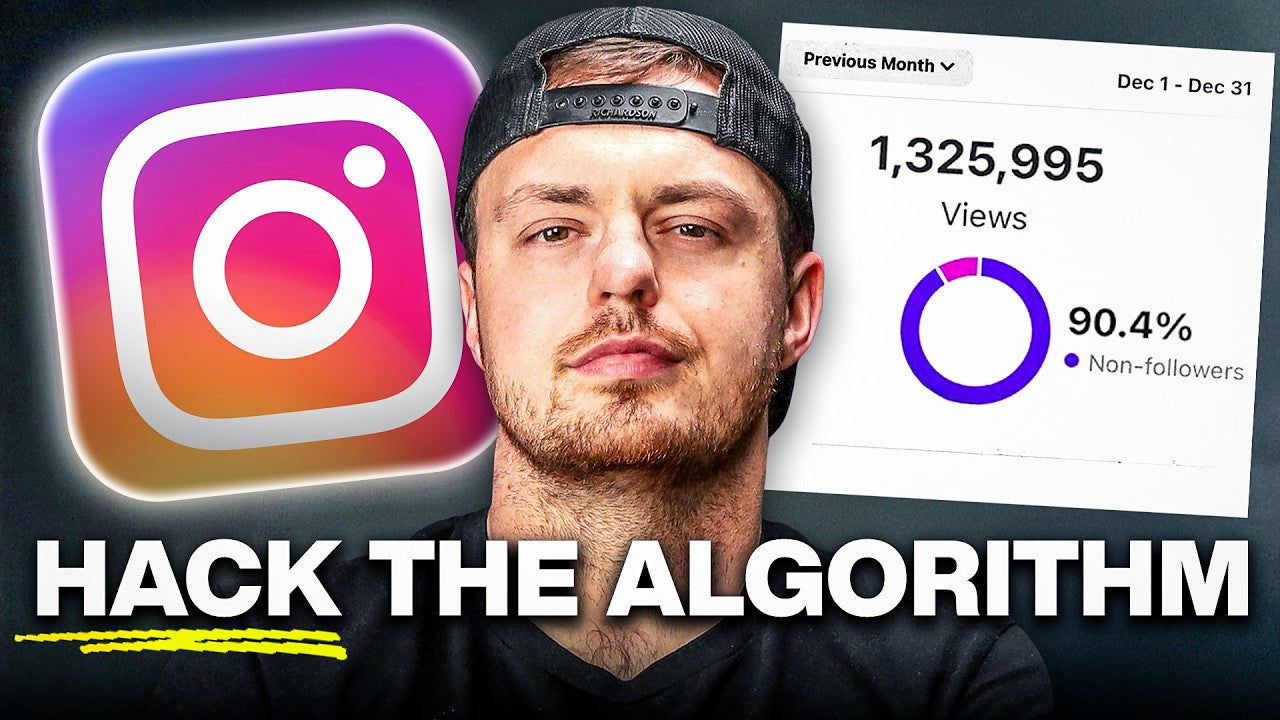
If your clothing brand is stuck on Instagram despite consistent posting, the problem is not effort—it is strategy.
The Instagram algorithm in 2026 has fundamentally changed. It no longer prioritizes followers, consistency alone, or polished brand content. Instead, it rewards content that performs with strangers.
For clothing brands, this means your success is now determined by:
-
How well your content captures attention instantly
-
Whether it gets shared, saved, and rewatched
-
How effectively your Shopify store converts that attention into sales
This guide breaks down exactly how to grow in 2026 using:
-
Instagram’s current algorithm mechanics
-
Shopify execution strategies (Metafields, Metaobjects, automation)
-
TikTok Shop and social commerce
-
AI-driven personalization
How the Instagram Algorithm Works in 2026

Instagram distributes content in progressive tiers, not all at once.
Step-by-Step Distribution Model
-
Your post is shown to:
-
A small group of followers
-
A test group of strangers
-
Instagram measures performance based on:
-
Watch time
-
Shares (especially DMs)
-
Saves
-
Session depth (profile visits + additional content views)
-
If signals are strong → content expands
-
If signals are weak → distribution stops
What This Means for Clothing Brands
Instagram is no longer testing your brand.
It is testing your content performance with cold audiences.
This is why:
-
Small brands can go viral
-
Large brands can stagnate
-
One post can outperform months of content
Instagram Algorithm Changes 2026: What Brands Need to Understand
The biggest Instagram algorithm changes 2026 introduced are centered around content relevance rather than audience size. The Instagram algorithm 2026 rewards posts that capture attention quickly, generate meaningful engagement, and encourage users to stay within the platform longer. For clothing brands, this means that creative execution now matters more than follower count. Brands that adapt to these Instagram algorithm changes 2026 by creating shareable, problem-focused content are seeing significantly stronger organic reach than brands relying on traditional promotional posts.

The 4 Key Ranking Signals (What Actually Drives Reach)
1. Watch Time
How long someone stays on your content.
2. Shares (Most Important Signal)
When users send your post via DM, Instagram sees it as high-value content.
3. Saves
Indicates long-term value.
4. Likes (Lowest Weight)
Still useful, but not a primary growth driver.
What No Longer Matters as Much
-
Follower count
-
Posting frequency alone
-
Hashtags
-
Posting time
Shift #1: Fix Your Instagram Bio for Conversion
Your bio is not branding—it is a conversion gateway.
Weak Clothing Brand Bio Example
“Premium clothing for everyday wear”
This fails because it is:
-
Generic
-
Non-specific
-
Not emotionally compelling
High-Converting Bio Formula
WHO + PROBLEM + OUTCOME
Example:
For women tired of sweaters that lose shape after 3 washes
Built to last 50+ wears without pilling

Shopify Execution: Align Your Store With Your Bio
Once a user clicks your profile, your Shopify store must reinforce the same message instantly.
Step 1: Use Shopify Metafields
Create structured product attributes:
-
durability_rating
-
fabric_type
-
shrink_resistance
-
fit_type
-
problem_solved
Step 2: Display Dynamic Benefits
Instead of writing descriptions manually:
-
Use Metafields to auto-populate product pages
-
Ensure consistent messaging across SKUs
Step 3: Use Meta Objects for Scalable Proof
Create reusable content blocks:
-
Fabric comparisons
-
Durability tests
-
Fit guides
Apply them across products without rewriting content.
How Shopify Conversion Optimization Supports Instagram Growth
Generating traffic through Instagram is only half the equation. Once users reach your website, Shopify conversion optimization becomes critical. If visitors arrive from Instagram but encounter slow pages, weak product messaging, or confusing navigation, conversion opportunities are lost. Successful brands align their Instagram content strategy with Shopify conversion optimization principles to create a seamless experience from discovery to purchase. This ensures that the traffic generated by the Instagram algorithm 2026 translates into measurable revenue rather than abandoned sessions.

Shift #2: Create Content for Strangers (Not Followers)
Most brands fail because they create content that requires context.
Content That Fails
-
“New drop live now”
-
“Behind the scenes”
-
“Restock announcement”
These only work for existing followers.
Content That Wins
Start with a customer problem.
Examples:
-
Why your hoodie pills after 10 washes
-
What cheap tees look like after 6 months
-
How to find a flattering fit
The Stranger Test
Before posting, ask:
Would someone who has never heard of my brand stop and watch this?
If not, revise the hook.
How to Grow a Clothing Brand on Instagram in 2026
Many founders ask how to grow a clothing brand on Instagram without relying on paid advertising. The answer lies in creating content that solves problems, answers questions, and provides value before asking for a sale. Brands that understand how to grow a clothing brand on Instagram focus on customer pain points rather than product announcements. Educational content, styling advice, fabric comparisons, and customer transformations consistently outperform promotional content because they align with how the Instagram algorithm 2026 evaluates engagement and retention.

Shopify Execution: Turn Content Into Conversion
Step 1: Embed High-Performing Reels
Add them to product pages:
-
Under product description
-
As proof content
Step 2: Build Content-to-Commerce Flow
Reel → Profile → Shopify → Purchase
Step 3: Add Proof Sections
Include:
-
Video comparisons
-
Customer reactions
-
Real-world usage
Shift #3: Quality Over Quantity
Posting more does not increase reach.
Better content does.
Key Insight
-
One high-performing post can drive traffic for months
-
Frequent low-quality posts create no growth
Shopify Execution: Capture Viral Traffic
When content spikes:
-
Add homepage banner (“As seen on Instagram”)
-
Create dedicated landing page
-
Track with UTM links
Automation (Shopify Flow)
Trigger actions:
-
Traffic spike → show urgency banner
-
High engagement → trigger email capture
Best Content Types for Clothing Brands

1. Try-On Reveals
2. Fabric Comparisons
3. Styling Guides
4. Cost-per-wear breakdowns
5. Real vs model content
Why These Work
They:
-
Increase watch time
-
Encourage shares
-
Provide save-worthy value
TikTok Shop: The New Growth Channel
TikTok
TikTok Shop is now a direct revenue channel, not just discovery.
How to Use TikTok Shop
-
Upload products directly
-
Tag products in videos
-
Partner with creators
Why It Matters
TikTok rewards:
-
Raw content
-
Problem-first messaging
-
Fast iteration
AI-Driven Personalization (Shopify)
AI is now critical for conversion.
What to Implement
-
Dynamic product recommendations
-
Behavior-based homepage content
-
Personalized bundles
Example
User watches hoodie durability content →
Shopify shows:
-
Durable hoodies
-
Fabric comparison section
Connecting Instagram Growth With Online Clothing Store Marketing
The most successful apparel brands no longer treat social media and ecommerce as separate channels. Effective online clothing store marketing connects Instagram content, Shopify experiences, email campaigns, SMS marketing, and retargeting into a unified customer journey. When visitors move from Instagram to a well-optimized Shopify store, brands can capture more leads, generate more sales, and improve long-term customer retention. This integrated approach allows businesses to maximize the value of every visitor generated through social media.
The Modern Clothing Brand Funnel (2026)
Old funnel:
Ads → Product page
New funnel:
Content → Discovery → Shopify → Retargeting
Full Stack Example
|
Stage |
Tool |
|
Discovery |
Instagram / TikTok |
|
Engagement |
Reels / UGC |
|
Conversion |
Shopify |
|
Retargeting |
Email / SMS |
Reposting Strategy (Underrated Growth Hack)

If a strong post underperforms:
-
Wait 2–3 weeks
-
Repost unchanged
Why It Works
-
New audience
-
New timing
-
New competition
Common Mistakes Clothing Brands Make
Many apparel brands struggle with growth not because of a lack of effort, but because they repeatedly make the same strategic mistakes. From weak positioning and inconsistent messaging to poor conversion systems and ineffective content strategies, these issues can limit growth even when traffic is increasing. Understanding the real reason clothing brands fail is often the first step toward building a more profitable and sustainable business.
-
Generic bios
-
Brand-focused content
-
Overposting low-quality content
-
Weak Shopify product pages
-
Ignoring TikTok and AI
What Winning Brands Do Instead
-
Speak directly to customer frustrations
-
Build content for strangers
-
Optimize Shopify for conversion
-
Use multiple growth channels
-
Focus on high-signal content
Why Clothing Brand Design Services Matter for Instagram Success
Many brands focus exclusively on content creation while overlooking the importance of presentation. Professional clothing brand design services help create a consistent visual identity across Instagram, Shopify, advertising campaigns, and customer touchpoints. Strong design improves brand recognition, increases trust, and supports higher engagement rates. As competition continues to increase, clothing brand design services can help brands stand out in crowded feeds while reinforcing the messaging and positioning that drive conversions.
Final Takeaway
The Instagram algorithm in 2026 rewards:
-
Relevance
-
Retention
-
Shareability
Not effort alone.
The brands that win are those that align:
-
Content
-
Messaging
-
Shopify execution
-
Multi-channel growth
If you want a clear breakdown of what is holding your brand back—and how to fix it across Instagram, Shopify, and your full funnel:
👉 https://www.optimizedstoreowner.com/schedule-strategy-session


Share:
How Sydney Sweeney Launched a Lingerie Brand the Right Way
Build a Shopify Clothing Store That Converts (2026 Tutorial)