

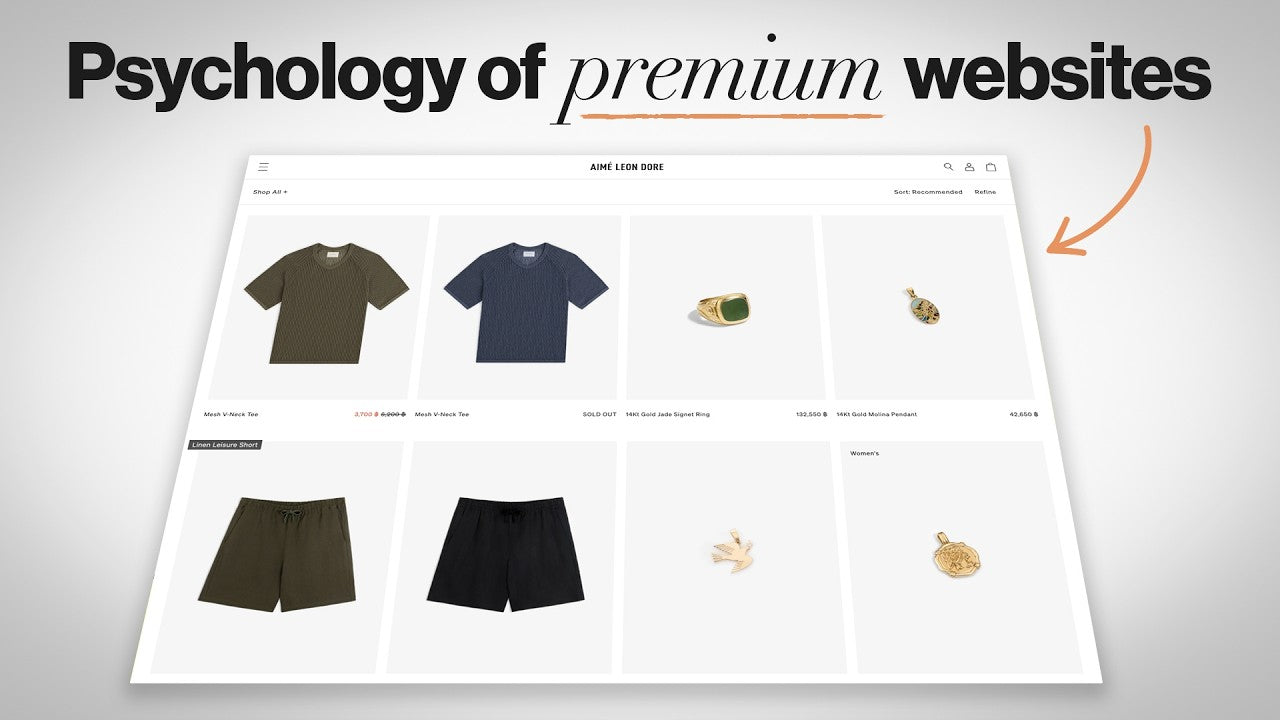
Your website can look like it costs $50,000 and still feel cheap.
At the same time, a Shopify store built on a $500 theme can feel more premium than a brand spending millions of dollars on advertising.
That's why so many brands ask how to make a Shopify store look premium without spending heavily on a complete redesign. The answer isn't simply choosing a more expensive theme. It involves understanding how to make a Shopify store feel premium through positioning, design, product presentation, merchandising, and the overall customer experience.
Why?
Because making a Shopify store feel premium isn't primarily a design problem.
It is a perception problem.
Premium isn't created by adding a cinematic homepage video, expensive photography, elaborate animations, or an elegant serif font. Those things can support a premium brand, but they cannot create one on their own.
Premium is a psychological perception.
And perception can be engineered.
The best premium Shopify stores consistently communicate the same message through their:
-
Brand positioning
-
Copy
-
Photography
-
Product pages
-
Pricing
-
Promotions
-
Product availability
-
User experience
-
Merchandising
-
Social commerce presence
-
Post-click experience
When those elements work together, a store feels confident, intentional, desirable, and valuable.
When they contradict each other, the store can look expensive while still feeling cheap.
Here is how to make your Shopify store feel genuinely premium—without simply spending more money on it.

1. Sell Identity, Not Just Product Features
Commodity brands sell function.
Premium brands sell identity.
A commodity clothing brand might lead with:
100% cotton.
240 GSM.
Machine washable.
True to size.
Those details matter. Customers need them.
However, those aren't usually the reason someone becomes emotionally attached to a brand.
A premium brand answers a different question:
Who does owning this product allow me to become—or say I am?
Consider the difference between these two homepage headlines:
Product-focused:
Premium heavyweight cotton hoodies.
Identity-focused:
Built for people who refuse to disappear into the crowd.
The first describes what you're selling.
The second begins creating a world your customer can identify with.
Run the Homepage Headline Test
Open your Shopify homepage and read your main hero headline out loud.
Then ask:
Does this describe my product, or does it describe the person who owns my product?
If your entire homepage could be dropped onto the website of five competing brands without anyone noticing, you haven't created much of an identity.
You've created a template.
Premium brands don't simply have customers.
They have people who want to belong to the world the brand represents.
That same principle is visible in the strategies used by successful clothing brands, where the product becomes part of a larger identity rather than being marketed as a standalone item.
Aimé Leon Dore is a good example. Its brand world extends far beyond the specifications of a garment. The clothing sits within an identity involving New York, basketball, cafés, lifestyle, nostalgia, and culture.
You're not simply purchasing a hoodie.
The product becomes an entry point into that world.
Shopify Execution: Separate Identity From Product Data
Don't make the mistake of removing useful specifications in an attempt to sound premium.
Keep your emotional positioning in the main copy while structuring technical information separately.
For example, create Shopify product metafields for:
-
Material
-
Fabric weight
-
Construction
-
Fit
-
Origin
-
Care instructions
-
Model sizing
-
Production method
Shopify metafields allow you to attach custom information directly to resources such as products. For more structured information containing several related fields, Shopify metaobjects can be used and referenced throughout the store.
That means your product page can lead with:
THE FEELING
Designed for late nights, loud rooms and people who don't need permission to stand out.
Then support it with expandable sections containing:
THE DETAILS
-
420 GSM heavyweight cotton
-
Oversized cut
-
Reinforced shoulder construction
-
Garment dyed
-
Pre-shrunk
You get emotion and substance.
That's considerably stronger than choosing one or the other.

2. Stop Training Customers to Wait for a Discount
If your Shopify store runs a sitewide sale every week, something eventually happens:
Your full price stops meaning anything.
Customers learn that $120 doesn't actually mean $120.
It means:
"Wait until Friday."
or:
"Give them your email address and they'll probably knock 20% off."
Once customers stop believing your pricing, maintaining a premium perception becomes difficult.
Premium brands tend to treat price as a statement of confidence rather than the opening position in a negotiation.
That doesn't mean you can never run a promotion.
It means promotions should have a reason.
For example:
-
End-of-season inventory
-
Private customer event
-
Limited launch promotion
-
Loyalty reward
-
Product bundle
-
Genuine clearance
-
Subscriber-only event
That's very different from:
20% OFF EVERYTHING! ENDS TONIGHT!
followed by another "ends tonight" sale three days later.
Chrome Hearts sits at the extreme end of this principle. The scarcity and resistance to conventional discounting contribute to the perception that the stated price is the price.
You don't have to copy that strategy.
The principle is what matters:
The more frequently you undermine your own price, the harder it becomes to convince customers that the price represents real value.
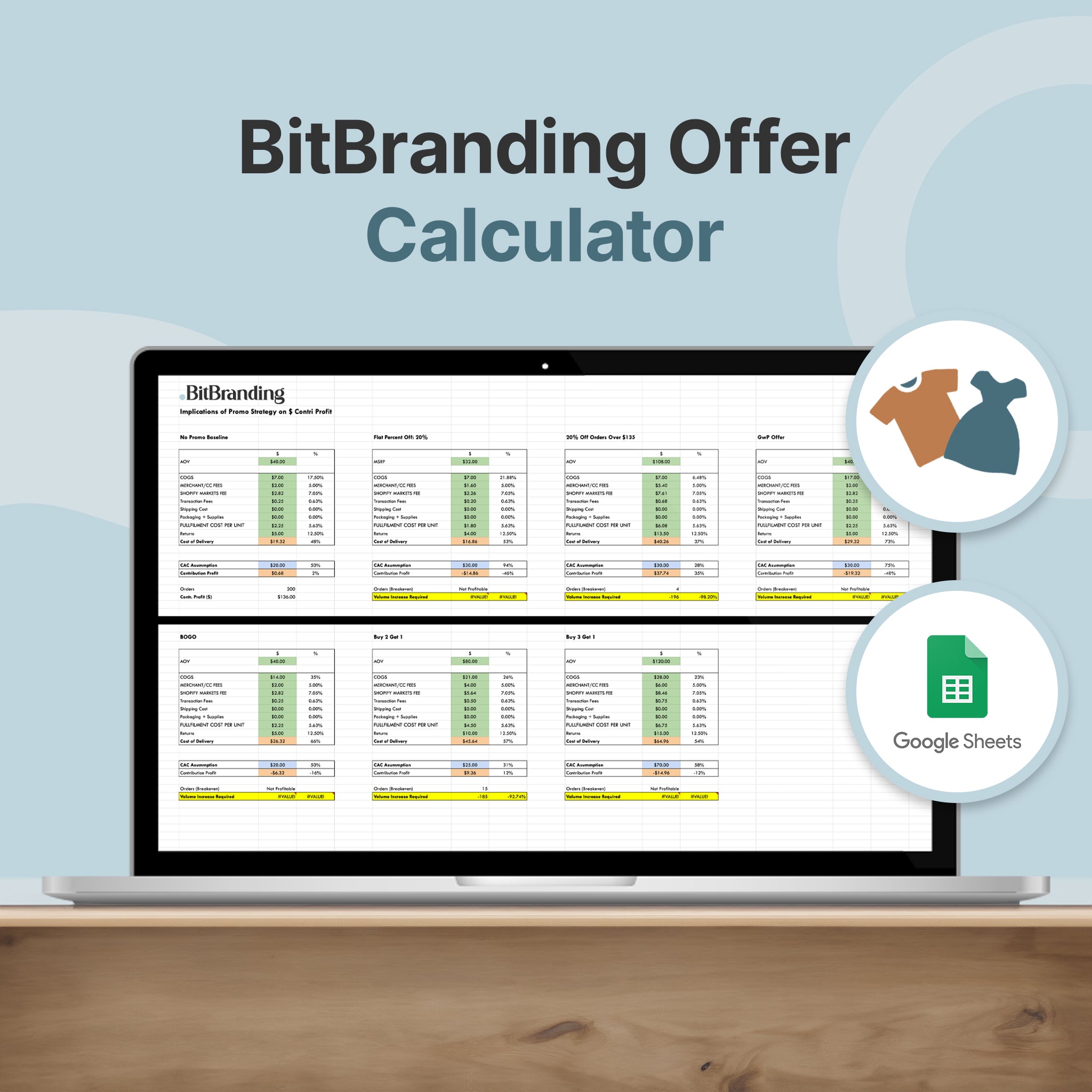
Use Bundling Before Blanket Discounting
If you need to increase average order value, don't automatically slash your prices.
You could instead create:
-
Complete-the-look bundles
-
Two-piece sets
-
Limited product combinations
-
Gift-with-purchase offers
-
VIP early access
-
Free shipping thresholds
This allows customers to receive additional value without repeatedly telling them that your products aren't worth their normal selling price. The same principle applies to product selection. Giving customers fewer, more intentional choices can sometimes create a stronger buying experience than overwhelming them with endless products, colors, and variations.

3. Use Real Scarcity Instead of Fake Urgency
There is a major psychological difference between scarcity and urgency.
A countdown timer saying:
BUY NOW—ONLY 09:42 LEFT!
is urgency.
A product genuinely selling out is scarcity.
Customers have become accustomed to artificial urgency.
They've seen:
-
Countdown timers that reset
-
"Only 2 remaining" messages that never change
-
Fake visitor counters
-
Endless flash sales
-
Permanent closing-down sales
-
"Last chance" emails followed by another last chance
Premium positioning requires considerably more confidence.
What Real Scarcity Can Look Like on Shopify
Use genuine mechanisms such as:
-
Limited production runs
-
Product drops
-
Seasonal capsules
-
Numbered releases
-
Pre-orders
-
Made-to-order products
-
Waitlists
-
Back-in-stock notifications
-
Genuine inventory availability
When a sought-after product displays Sold Out, that can sometimes create more desire than putting 20% off beside it.
One signals demand.
The other can signal difficulty selling.
Supreme famously built much of its model around product drops and limited availability. Once an item disappeared, the scarcity itself became part of the culture surrounding the brand.
Again, you don't need to copy Supreme.
Take the underlying mechanism:
Premium brands give customers a credible reason why something isn't available to everyone all the time.

4. Show the Effort Behind the Product
People tend to assign greater value to things when they can see the effort, expertise, craftsmanship, or story involved in creating them.
If your Shopify store shows none of that, you're asking the customer to accept your price without giving them enough evidence.
Imagine two jackets priced at $240.
Product A says:
Premium jacket.
Black.
Available S–XL.
Product B explains:
Cut from a 14 oz Japanese canvas and garment washed individually to create subtle variation between pieces. Reinforced at major stress points and finished in small production runs.
Same category.
Entirely different perception.
This is where many premium Shopify brands underperform.
The company may genuinely produce an exceptional product, yet almost none of that effort makes it onto the product page.
Show Your Process
Depending on your product, consider showing:
-
Material sourcing
-
Manufacturing
-
Hand finishing
-
Pattern development
-
Quality control
-
Prototyping
-
Packaging
-
Artist collaboration
-
Limited production
-
Product testing
-
Founder involvement
High-quality visual storytelling doesn't always require a traditional production process either. New AI-powered workflows are giving clothing brands more ways to create product and campaign imagery while maintaining a consistent visual direction.
If something takes longer because it's made to order, stop automatically apologizing for the shipping time.
Explain why it takes longer.
Instead of:
Please allow 14–21 days for shipping. Sorry for the delay.
Consider:
Each piece is finished to order. Please allow approximately 14–21 days before dispatch.
The wait hasn't changed.
The meaning of the wait has.
Bode is an excellent illustration of this principle. Its brand storytelling frequently connects garments to their textiles, construction, history, and provenance.
The process becomes part of the product.
Shopify Execution: Build Reusable Craftsmanship Content
If multiple products share the same construction technique or material story, don't manually paste the same paragraph into 40 product descriptions.
Create structured content.
For example, you could create a Shopify metaobject called:
Craftsmanship Story
with fields such as:
-
Process name
-
Short explanation
-
Detailed explanation
-
Workshop image
-
Material image
-
Video
-
Care requirements
Individual products can reference the appropriate craftsmanship story through metafields, while compatible theme settings can use metaobjects and metafields as dynamic data sources.
Now you can update the story once and reuse it consistently across multiple SKUs.
That's cleaner operationally and produces a far more polished customer experience.
Visual Evidence to Add
This is an ideal section for genuine proof.
Consider including:
[IMAGE: Close-up showing material or construction detail]
[IMAGE: Workshop/manufacturing image]
[BEFORE & AFTER: Standard product description vs. expanded premium product storytelling]
If you have conversion-rate data from an actual redesign, this is also where it belongs.
For example:
[CASE STUDY: Product-page conversion rate before and after adding craftsmanship, fit and product-benefit content]
Only publish numbers you can document. Real evidence adds credibility. Invented statistics destroy it.

5. Treat Your Product Page Like Your Best Salesperson
For many Shopify stores, the product page is where the serious buying decision happens.
Yet it is often one of the least-developed pages on the entire website.
The typical product page looks something like this:
-
Product photos
-
Product name
-
Price
-
Size selector
-
Add to Cart
-
Two-sentence description
-
"You may also like..."
That's not enough if you're asking customers to trust a relatively unknown premium brand.
Established companies benefit from years of brand recognition.
A growing Shopify brand does not have that luxury.
Your product page has to do more of the selling.
Optimize Your Shopify Product Pages for Conversion
Effective Shopify product page optimization isn't about making a product page longer. It's about giving customers the right information at the moment they need it. Product photography, product benefits, materials, sizing, reviews, shipping details, returns, and clear calls to action should work together to answer the questions that could otherwise prevent a purchase.
Your product page is where your premium positioning needs to become tangible. If the homepage communicates quality and exclusivity but the product page contains limited photography, generic copy, and little information about the product, the experience becomes inconsistent. A well-optimized product page connects the emotional story with practical evidence, helping customers understand not only what they're buying, but why it's worth the price.
A Premium Shopify Product Page Should Answer:
What is it?
Clear product information.
Why is it different?
Construction, materials, benefits and design.
Why should I care?
Connect features to the customer's experience.
Why does it cost this much?
Show the materials, process, quality or exclusivity supporting the price.
How will it fit?
Include useful sizing guidance.
Can I trust you?
Use genuine reviews, policies, shipping information and transparent details.
What happens next?
Give the customer an obvious primary CTA.
Example Product Page Structure
A strong Shopify PDP might contain:
1. Product gallery
Include lifestyle, front, back, detail, texture and scale/fit imagery.
2. Product title + price
Keep it simple.
3. One-sentence positioning statement
Why this product deserves attention.
4. Variant/size selection
Easy to understand and accessible.
5. Primary Add to Cart button
One unmistakable action.
6. Key benefits
Three to five concise benefits.
7. Product story
Why the product exists.
8. Construction and materials
Give customers enough evidence to justify the price.
9. Fit and sizing
Reduce uncertainty.
10. Delivery and returns
Eliminate unnecessary friction.
11. Brand/process story
Especially important for visitors landing directly on a PDP from an ad, creator or social-commerce channel.
12. Reviews or customer evidence
Where appropriate.
13. Complementary products
Not simply random recommendations.
Shopify's Search & Discovery tools allow compatible themes to display related and complementary products, with recommendations that can be automatically generated or manually influenced.
So instead of another generic:
You may also like...
Think more intentionally:
Complete the Set
or:
Worn With
or:
Built to Pair With
The mechanics can be similar.
The merchandising experience feels completely different.
Connect Premium Design With Shopify Conversion Rate Optimization
A premium Shopify store shouldn't simply look impressive. It should make the buying decision easier by giving customers the information, confidence, and clarity they need to move forward. This is where Shopify conversion rate optimization becomes important. Rather than adding more popups, countdown timers, or promotional messages, focus on identifying the points where customers hesitate and improving those parts of the experience.
A customer may like a product but still leave because they don't understand the fit, can't find shipping information, don't see enough product detail, or aren't convinced the product is worth its price. Strong conversion optimization addresses these concerns through clearer messaging, better product information, stronger trust signals, and a more focused purchase journey. The goal isn't to pressure customers into buying. It's to remove unnecessary friction so the right customer feels confident saying yes.

6. Restraint Makes a Shopify Store Feel More Premium
Open enough ecommerce stores and you'll start seeing the same collection of elements:
-
Spin-to-win popup
-
Sticky Add to Cart
-
Countdown timer
-
Trust badges
-
Chat bubble
-
Free-shipping banner
-
Email popup
-
SMS popup
-
Exit-intent popup
-
Review widget
-
Recently purchased notification
-
Another discount banner
Each component might have a perfectly rational conversion argument behind it.
Stack all of them together and something changes.
The store begins to feel desperate. Before adding another Shopify app to solve a conversion problem, it's worth understanding which apps your store actually needs and which ones may simply add more clutter.
Premium brands generally communicate confidence through restraint.
They allow content to breathe.
That usually means:
-
More deliberate whitespace
-
Strong visual hierarchy
-
Fewer competing calls to action
-
Cleaner navigation
-
Carefully edited copy
-
Fewer interruptions
-
More intentional photography
-
Consistent typography
-
Less unnecessary movement
The Row demonstrates the extreme version of this aesthetic particularly well: restrained interfaces, large amounts of space, editorial product imagery and very little visual clutter.
The lesson isn't "copy The Row."
It's:
Remove anything that doesn't contribute to the buying decision or the brand experience.
Run the App Clutter Audit
Go through your Shopify store on mobile and ask:
What appears before the customer has had time to understand what we sell?
Then look for:
-
Multiple popups
-
Overlapping widgets
-
Promo bars
-
Chat overlays
-
Loyalty buttons
-
Accessibility widgets
-
Sticky elements
-
Reviews floating over content
-
Mobile screen obstruction
If a customer lands on a 390-pixel-wide phone screen and half of it is occupied by widgets, the experience probably won't feel premium.
Remove what you don't need. A useful next step is to audit the apps already installed on your store and remove anything that duplicates existing functionality, slows down the experience, or adds unnecessary distractions.
You can always test the effect rather than assuming every app deserves permanent screen space.
Make Shopify Website Design Feel Intentional
Effective Shopify website design isn't about adding more visual elements. It is about creating a clear hierarchy that helps customers understand the brand, discover products, and move through the website without unnecessary distractions. Strong typography, deliberate whitespace, high-quality imagery, intuitive navigation, and focused calls to action can make a relatively simple store feel considerably more sophisticated.
This is also where Shopify store design and conversion experience need to work together. A website can look beautiful but still create friction if customers can't find important information or understand what to do next. Premium design should therefore support the entire customer journey, not simply make the homepage look impressive.

7. Stop Trying to Appeal to Everyone
Premium brands aren't frightened by the idea that some people won't like them.
In fact, that selectivity often helps the right customers like them more.
Trying to appeal to everyone tends to create generic branding:
High-quality products for every occasion.
Designed with you in mind.
Premium quality. Timeless style.
These statements aren't necessarily wrong.
They're simply difficult to own.
A stronger brand knows:
-
Who the customer is
-
What they care about
-
What they reject
-
Where they spend time
-
How they speak
-
What communities they identify with
-
What buying the product says about them
That identity should influence:
-
Models
-
Locations
-
Photography
-
Copy
-
Social content
-
Collaborations
-
Product names
-
Packaging
-
Email
-
Creator partnerships
-
Merchandising
Patagonia is one obvious example. Environmental activism isn't hidden behind generic outdoor-product messaging. It is built into the identity of the brand.
That will inevitably resonate with some people more strongly than others.
That's the point.
If your brand speaks clearly to one defined customer, the right visitor can think:
"This is for people like me."
That is far more powerful than getting everyone to think:
"This seems fine."
Build a Consistent Shopify Brand
Strong Shopify branding goes beyond your logo, colors, and typography. Your positioning should influence the way you write product descriptions, select photography, present products, communicate on social media, design packaging, and interact with customers. Every touchpoint should reinforce the same identity.
This consistency is especially important when customers discover your brand outside your website. Someone arriving through Google, Instagram, TikTok, YouTube, or a creator recommendation should encounter the same personality and positioning when they reach your Shopify store. That's how Shopify branding becomes recognizable rather than simply attractive.

8. Don't Copy the Aesthetics of Premium Brands and Ignore the Mechanics
This may be the biggest mistake Shopify brands make when attempting to move upmarket.
They copy the appearance.
They see that luxury websites use:
-
Serif fonts
-
Smaller typography
-
Neutral palettes
-
Black-and-white photography
-
Large hero imagery
-
Minimal logos
-
Lots of whitespace
So they copy those things.
And aesthetically, the site looks expensive.
Then directly underneath the beautiful homepage image is:
🔥 30% OFF SITEWIDE 🔥
Followed by:
SALE ENDS IN 01:46:23
Then:
SPIN TO WIN 20% OFF!
Then every product has a strikethrough price.
The visitor notices the disconnect immediately—even if they can't explain exactly what's wrong.
The site looks expensive.
It doesn't feel premium.
Why?
Because premium positioning isn't an aesthetic layer.
It's an operating system.
Your:
-
Positioning
-
Pricing
-
Scarcity
-
Merchandising
-
Promotions
-
Copy
-
Product
-
Photography
-
Packaging
-
Customer service
all need to support the same story.
Premium Shopify Store Design Requires More Than Aesthetics
A premium Shopify store isn't created by copying the visual language of luxury brands. Serif fonts, neutral colors, large photography, and generous whitespace can contribute to a premium appearance, but they cannot compensate for weak positioning, constant discounting, poor product pages, or a confusing customer journey.
Effective Shopify ecommerce design brings these elements together. The visual experience should support the brand's positioning while the underlying structure, merchandising, product information, and conversion flow support the customer's decision. That's the difference between a store that simply looks expensive and one that actually feels valuable.

9. Extend the Premium Experience Beyond Your Shopify Homepage
Today's customer journey isn't:
Google ad → homepage → checkout.
People may discover your brand through:
-
TikTok
-
Instagram
-
Facebook
-
YouTube
-
Creators
-
Search
-
Email
-
AI-powered discovery tools
-
Social commerce
-
Marketplace integrations
-
Direct recommendations
A premium brand therefore has to feel consistent outside the website as well.
TikTok Shop and Social Commerce
Shopify supports social-commerce channels that allow merchants to sell through platforms including Facebook, Instagram and TikTok. Shopify's TikTok sales channel can connect with TikTok Shop and synchronize products, inventory, fulfillment and orders.
That changes the strategy.
Don't think of TikTok simply as another advertising channel.
Think of it as another storefront.
A customer may discover the product, watch someone demonstrate it and buy without following the traditional homepage journey.
Your product identity therefore needs to survive outside the beautifully designed Shopify theme.
For a premium brand, creator and short-form video content could show:
-
How the garment falls
-
Fabric movement
-
Construction details
-
Packaging
-
Styling
-
Manufacturing
-
Behind the scenes
-
Limited drops
-
Founder commentary
That is premium storytelling translated into social commerce.
Keep Inventory and Scarcity Honest
If limited availability is central to your strategy, synchronize inventory properly across channels.
TikTok Shop orders can sync back into Shopify, with inventory checks taking place as orders are created.
Scarcity only strengthens the brand when it is genuine.

10. Use AI Personalization Without Making the Store Feel Like a Robot
AI is increasingly being used in ecommerce for product recommendations, personalization, customer support and merchandising. Shopify itself highlights AI-powered recommendations based on signals including browsing behavior, purchase history, similar customer behavior and cart contents as one application of AI personalization.
That creates an interesting question for premium brands:
How can you personalize the experience without cluttering it?
The answer comes back to restraint.
You don't need five AI widgets telling customers they're using AI.
Use personalization behind the scenes to make the experience more relevant.
AI can also be used beyond personalization to streamline repetitive marketing and operational workflows, giving clothing brands more room to focus on strategy, creative direction, and customer experience.
Examples include:
-
Better product recommendations
-
More relevant complementary products
-
Personalized collection ordering
-
Different offers for returning customers
-
Geographic merchandising
-
Smarter search
-
Customer-service assistance
-
Personalized email or SMS follow-up
The premium experience should feel:
"They understand what I'm looking for."
Not:
"Their website has installed every AI app in the Shopify App Store."
Technology should reduce friction.
It should not become the experience itself.

11. Use Your Shopify Data Structure to Create Consistency
One advantage modern Shopify stores have is the ability to make rich product storytelling systematic.
You don't need to rebuild each product page manually.
Create a structured content model.
For example:
Product Metafields
Use product-specific metafields for:
-
Fit
-
Fabric weight
-
Model size
-
Material
-
Wash instructions
-
Country of manufacture
-
Production lead time
-
Limited-edition number
-
Technical features
Shopify describes metafields as a way to add custom fields to resources, while metaobjects are appropriate when information needs to be represented by multiple related fields.
Metaobjects
Create reusable content objects such as:
Designer
-
Name
-
Biography
-
Portrait
-
Quote
Material
-
Name
-
Origin
-
Composition
-
Image
-
Story
-
Care information
Craft Process
-
Process
-
Explanation
-
Workshop
-
Images
-
Video
Collection Story
-
Collection name
-
Inspiration
-
Campaign image
-
Creative director note
Your product can then reference those objects rather than repeating text manually.
The result?
A more consistent premium experience—and far easier content management as your catalog grows.
Structured content can also make Shopify store optimization more scalable as your catalog grows. Instead of manually maintaining the same information across multiple product pages, brands can create a consistent system for product details, materials, fit, craftsmanship, and collection stories. That consistency helps both the customer experience and the internal management of the store.

12. Prove the Premium Experience With Evidence
Premium branding becomes stronger when customers can see the proof.
Don't simply say:
Meticulously constructed.
Show the stitching.
Don't simply say:
Exceptional materials.
Show the material close-up and explain where it came from.
Don't simply say:
Designed for the perfect fit.
Show multiple people wearing the product and provide their measurements.
Don't simply say:
Made by artisans.
Show the process.
Visual Evidence Checklist
Add relevant proof throughout the site:
Homepage
[SCREENSHOT/IMAGE: Brand-world lifestyle photography]
Product Page
[IMAGE: Product front/back/detail photography]
[IMAGE: Macro material or construction shot]
[IMAGE: Product worn on model]
[IMAGE: Model measurements and size worn]
Process Section
[IMAGE/VIDEO: Product being manufactured]
Before-and-After Case Study
[SCREENSHOT: Previous PDP]
[SCREENSHOT: Redesigned premium PDP]
[DATA: Conversion rate, Add to Cart rate, AOV or revenue-per-session improvement—only when verified]
If you have actual analytics, use them. The same approach can be applied to advertising. Instead of assuming an ad is failing because of the creative alone, analyze the customer journey and look for the specific point where performance breaks down.
For example:
After restructuring the product page, Add to Cart rate increased from [verified number] to [verified number].
Specific proof is stronger than vague language such as:
"The redesign massively improved conversions."
Shopify's Search & Discovery reporting can also provide information about search and recommendation performance, giving merchants another source of evidence for merchandising decisions.
Use data where you have it.
Never manufacture it where you don't.

Premium Shopify Store Checklist
Before spending another $20,000 on photography, redesigns or animations, review these questions.
Brand
Does the website clearly communicate who the brand is for?
Does the homepage sell an identity rather than simply list product features?
Could your copy belong to ten competitors?
Pricing
Do customers have a reason to trust the full retail price?
Are promotions intentional—or constant?
Are you unintentionally training customers to wait for discounts?
Scarcity
Is scarcity genuine?
Could product drops, waitlists, limited production or made-to-order products replace fake urgency?
Product Pages
Do your PDPs explain:
-
What makes the product different?
-
Why the customer should care?
-
How it is constructed?
-
How it fits?
-
Why it costs what it costs?
-
Why the customer should trust you?
UX
Is there one obvious next action?
How many popups, banners, widgets and floating buttons compete for attention?
Could you remove 20% of the interface and improve the experience?
Identity
Are you trying to appeal to everyone?
Do your models, photography, language and product selection clearly reflect your ideal customer?
Technology
Are Shopify metafields and metaobjects being used to keep product content detailed and consistent?
Are recommendations actually relevant?
Are social-commerce channels extending the brand rather than diluting it?
Is AI being used to improve relevance rather than add clutter?
Evidence
Can customers see the craftsmanship?
Do you show materials and construction close-up?
Are there genuine reviews, demonstrations, case studies or documented performance results supporting your claims?
Expensive Design Doesn't Make a Premium Shopify Store
A premium brand experience isn't created by spending more money.
It's created when everything agrees.
Your headline tells the customer who the brand is for.
Your photography reinforces it.
Your product page explains why the product deserves its price.
Your pricing communicates confidence.
Your scarcity is believable.
Your promotions are deliberate.
Your user experience shows restraint.
Your product storytelling demonstrates effort.
Your social channels extend the same identity.
Your Shopify infrastructure makes the information consistent.
And your evidence gives customers a reason to believe you.
That's when a store begins to feel premium.
Not because you added another app.
Not because you changed the font.
Not because you spent five figures on a homepage video.
Because the underlying mechanics finally support the positioning.
Premium was never really about the price tag.
It is about whether every part of the customer experience is telling the same story about what the brand stands for, what the product is worth, and who it was created for.
And when those mechanics are right, you don't necessarily need a bigger budget.
You need a better system.
Want to Know What's Keeping Your Shopify Store From Feeling Premium?
Sometimes the difficult part isn't knowing that your website needs work.
It's identifying which part is undermining the rest of the experience.
Is it your positioning?
Your product pages?
Your merchandising?
Your promotions?
Your pricing strategy?
Your conversion flow?
Or is your site visually polished while the mechanics underneath it are sending customers the opposite message?
Schedule a free strategy session and get an expert perspective on where your Shopify store has the greatest opportunity for improvement:
Schedule Your Free Strategy Session

Share:
Every ESSENTIAL Shopify App Explained in 12 Minutes (No BS)
How Shopify's Smart Pricing App Actually Works (Full Walkthrough)