

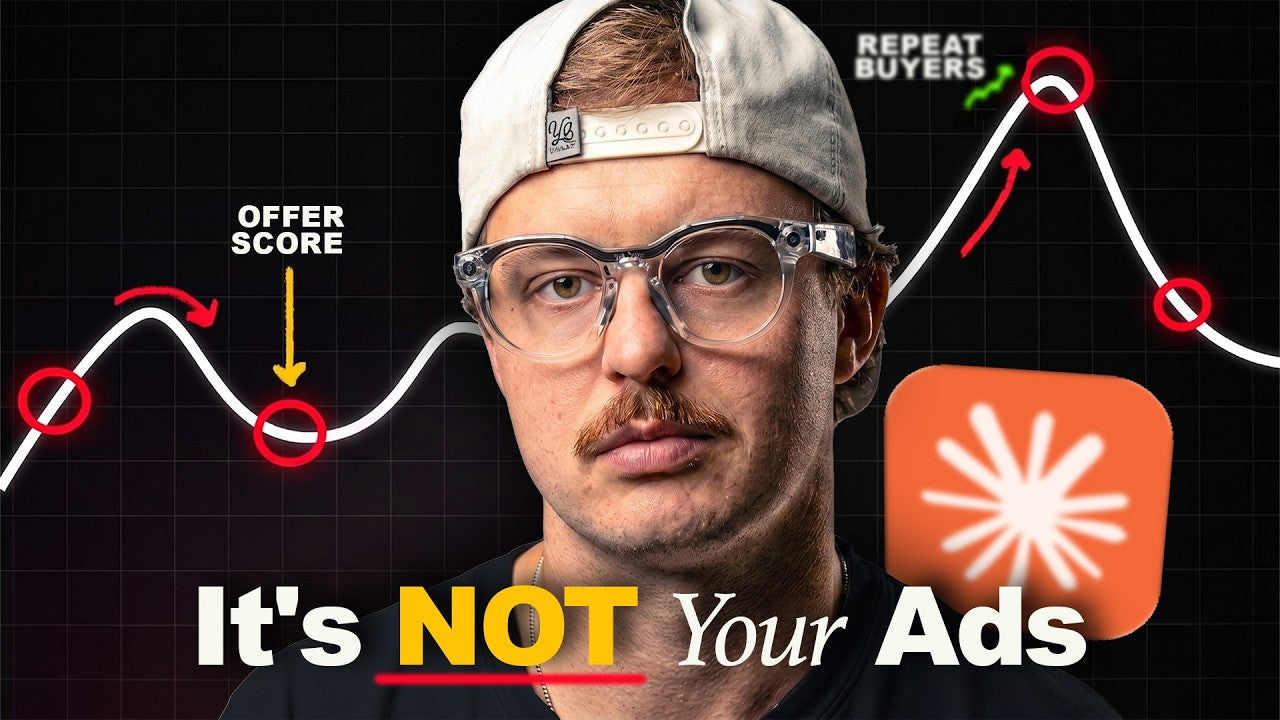
I Used Claude to Find Why My Clothing Brand Ads Were Failing
Discover the hidden conversion leaks in your Shopify store and learn how AI-powered audits can uncover the real reason your clothing brand isn't scaling.
The Frustrating Truth About Clothing Brand Advertising
If you're running a clothing brand, you've probably experienced this cycle:
-
Launch new ad creatives.
-
Test new audiences.
-
Hire influencers.
-
Run a sale.
-
See a temporary spike in sales.
-
Watch performance flatten again.
Most founders assume their ads are the problem.
In reality, the ads are often doing exactly what they're supposed to do: bringing visitors to your store.
The real problem happens after the click.
After working with hundreds of apparel brands, one pattern appears repeatedly: brands spend thousands improving advertising while ignoring the friction points that prevent customers from buying. The result? More traffic flowing into a system that isn't optimized to convert.
Before spending another dollar on Meta Ads, Google Ads, TikTok Shop campaigns, or influencer marketing, it's worth asking a different question:
What if your marketing isn't broken at all?
Why Most Clothing Brand Ads Fail
Advertising amplifies what's already happening.
If customers love your offer, ads scale profitably.
If customers hesitate because of poor product positioning, confusing navigation, slow shipping, sizing uncertainty, or price resistance, ads simply send more people into the same conversion bottlenecks.
Think of your store as a bucket.
Ads pour water into it.
If the bucket has holes, adding more water doesn't solve the problem.
You fix the leaks first.
This is where AI tools like Claude can become surprisingly powerful—not for writing ad copy, but for diagnosing the real problems affecting revenue.
The Clothing Offer Equation

One framework gaining traction among apparel marketers is what some call the Clothing Offer Equation.
Rather than guessing what's wrong, it evaluates the key variables influencing purchase decisions.
The Formula
(Style Aspiration × Quality & Fit Confidence) ÷ (Waiting Time + Shopping Friction + Price Sensitivity)
The equation measures both the reasons people want to buy and the reasons they hesitate.
The Top of the Equation: Purchase Motivation
1. Style Aspiration (SA)
This is not about selling a hoodie, pair of shorts, or jacket.
Customers buy identity.
They buy:
-
Confidence
-
Status
-
Belonging
-
Self-expression
-
Lifestyle alignment
The strongest clothing brands sell a version of who customers want to become.
Examples include:
-
Performance athletes
-
Outdoor adventurers
-
Streetwear enthusiasts
-
Minimalist professionals
-
Fitness-focused consumers
When style aspiration is weak, your products become commodities.
2. Quality & Fit Confidence (QF)
Customers need confidence that:
-
The product fits properly.
-
Materials feel premium.
-
Construction is durable.
-
Colors match expectations.
-
Reviews are trustworthy.
This confidence is built through:
-
Detailed product descriptions
-
Customer reviews
-
User-generated content
-
Sizing guides
-
Product videos
-
Fabric explanations
Shopify Execution Example
Instead of manually updating product details across hundreds of SKUs, use Shopify Metaobjects and Metafields to create reusable product information.
For example:
-
Fabric composition
-
Care instructions
-
Fit notes
-
Manufacturing details
-
Sustainability claims
These can automatically populate product pages, improving consistency and customer trust.
The Bottom of the Equation: Conversion Friction
3. Waiting Time (W)
Shipping speed directly affects conversions.
Customers have become accustomed to fast fulfillment.
Long shipping times create uncertainty and reduce purchase intent.
Warning signs include:
-
Frequent "Where is my order?" emails
-
Low repeat purchase rates
-
Cart abandonment after shipping estimates appear
Shopify Execution Example
Display:
-
Delivery estimates
-
Real-time tracking updates
-
Shipping countdown timers
-
Local fulfillment options
Apps that provide estimated arrival dates often improve customer confidence significantly.
4. Shopping Friction (SF)
Every unnecessary click creates risk.
Common friction points include:
-
Confusing navigation
-
Slow page speed
-
Hidden shipping costs
-
Difficult checkout flows
-
Poor mobile experience
Real-World Example
Many clothing stores feature large hero banners with beautiful lifestyle imagery but fail to answer a basic question:
What do you sell?
If visitors need more than a few seconds to understand your value proposition, friction is already hurting conversions.
Shopify Optimization Checklist
Your homepage should clearly communicate:
-
Who the product is for
-
What makes it different
-
Why customers should trust you
-
Where visitors should click next
Ideally:
-
Primary CTA above the fold
-
Mobile-first design
-
Fast loading images
-
Simplified navigation
-
Shop Pay enabled
5. Price Sensitivity (PS)
Many founders immediately blame pricing.
Sometimes pricing isn't the problem.
Perceived value is.
If customers only purchase when a discount code is available, you've likely trained your audience to wait for sales.
Common symptoms include:
-
High coupon usage
-
Revenue spikes during promotions
-
Weak full-price performance
-
Margin compression
Shopify Execution Example
Instead of offering blanket discounts:
Create value-focused content around:
-
Fabric quality
-
Product longevity
-
Manufacturing process
-
Customer stories
-
Product comparisons
This helps justify premium pricing without sacrificing margins.
How to Score Your Brand

Rate each variable on a scale from 1 to 10.
Style Aspiration
1: Customers actively identify with your brand.
10: Customers feel little emotional connection.
Quality & Fit Confidence
1: Strong reviews, repeat purchases, minimal returns.
10: Frequent complaints and sizing issues.
Waiting Time
1: Fast delivery with clear communication.
10: Long delays and poor tracking.
Shopping Friction
1: Seamless mobile checkout.
10: High cart abandonment and confusing navigation.
Price Sensitivity
1: Customers purchase confidently at full price.
10: Sales only occur during promotions.
Example Calculation
Let's assume:
-
Style Aspiration = 8
-
Quality & Fit Confidence = 7
-
Waiting Time = 3
-
Shopping Friction = 2
-
Price Sensitivity = 5
Calculation:
(8 × 7) ÷ (3 + 2 + 5)
56 ÷ 10 = 5.6
Score Interpretation
|
Score |
Meaning |
|
7–10 |
Strong offer ready to scale |
|
4–6 |
Fix bottlenecks before scaling |
|
Below 4 |
Significant friction causing wasted ad spend |
How Claude Can Audit Your Clothing Brand

Most brands use AI incorrectly.
They ask:
-
"Write Facebook ads."
-
"Create product descriptions."
-
"Generate email campaigns."
The better use case is strategic diagnosis.
Claude can function as a repeatable audit system that evaluates:
-
Shopify analytics
-
Conversion rates
-
Return rates
-
Customer reviews
-
Delivery performance
-
Product positioning
-
Discount dependency
Instead of guessing, Claude identifies which variable is hurting growth most.
Building a Repeatable Claude Skill
One of the most powerful approaches is creating a dedicated Claude Skill that performs monthly audits.
The skill can:
-
Evaluate store performance
-
Calculate your offer score
-
Identify bottlenecks
-
Generate a 30-day action plan
-
Recommend specific improvements
This turns Claude into an ongoing strategic advisor rather than a simple content generator.
Modern Growth Channels Beyond Meta and Google
Many clothing brands still rely almost entirely on Facebook and Google Ads.
The landscape has evolved.
Today's fastest-growing apparel brands often combine:
TikTok Shop
Social commerce allows consumers to purchase directly within the platform, reducing checkout friction.
AI-Powered Personalization
Tools can dynamically:
-
Recommend products
-
Personalize collections
-
Adjust merchandising
-
Increase average order value
Creator Partnerships
Micro-influencers often outperform traditional influencer campaigns because of higher trust and engagement.
User-Generated Content
Authentic customer content frequently converts better than polished brand creatives.
SMS Marketing
High-performing apparel brands increasingly use SMS flows to:
-
Recover abandoned carts
-
Launch products
-
Drive repeat purchases
Visual Evidence You Should Collect
When running your audit, gather screenshots of:
Before
-
Low-converting product pages
-
Confusing homepage messaging
-
Checkout friction points
-
Weak social proof
After
-
Enhanced product descriptions
-
Improved review sections
-
Faster checkout experiences
-
Stronger value communication
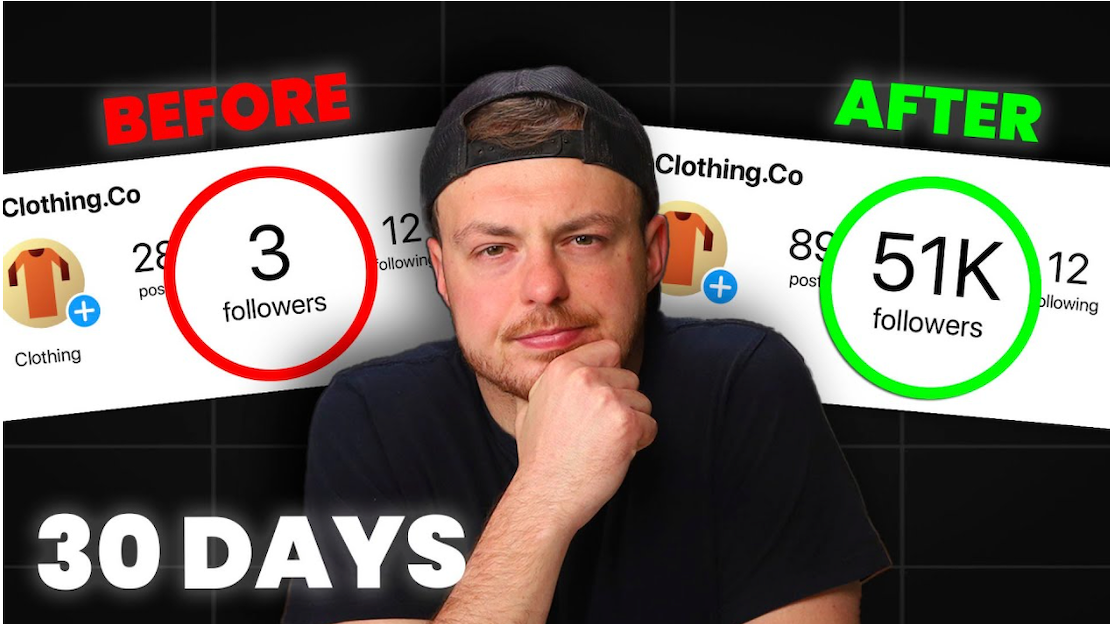
Tracking visual changes alongside conversion improvements helps identify which optimizations create measurable results.
The Biggest Mistake Clothing Brands Make
When sales slow down, most brands immediately create:
-
New ads
-
New creatives
-
New campaigns
But a low-performing score often points to deeper issues:
-
Weak positioning
-
Poor perceived value
-
Shipping concerns
-
Customer uncertainty
More advertising simply magnifies those weaknesses.
Your 30-Day Action Plan
Week 1
Audit:
-
Shopify conversion data
-
Return reasons
-
Customer reviews
-
Shipping performance
Week 2
Improve:
-
Product pages
-
Sizing information
-
Review visibility
-
Value communication
Week 3
Reduce:
-
Checkout friction
-
Mobile usability issues
-
Navigation confusion
Week 4
Recalculate your score and compare results.
Only after addressing bottlenecks should you increase advertising budgets.
Final Thoughts
The next time your ads stop performing, resist the urge to immediately launch another campaign.
Instead, ask:
-
Is my offer compelling enough?
-
Do customers trust the quality?
-
Is shipping creating hesitation?
-
Is my checkout experience frictionless?
-
Have I trained customers to wait for discounts?
The answer may not be in your advertising account at all.
It may be hiding somewhere in your Shopify store.
The brands that scale fastest aren't always the best marketers.
They're the brands that systematically identify and remove the friction preventing customers from saying "yes."
Ready to Uncover What's Really Hurting Your Conversions?

Book a strategy session and discover where your clothing brand is leaking revenue:




Share:
Every Shopify Store Owner Is Missing This Claude Workflow
The Shopify Apps We Deleted (And Why You Should Too)