

Why can one clothing brand release a new collection and sell out within days, while another brand—with excellent products and a larger advertising budget—struggles to attract clicks?
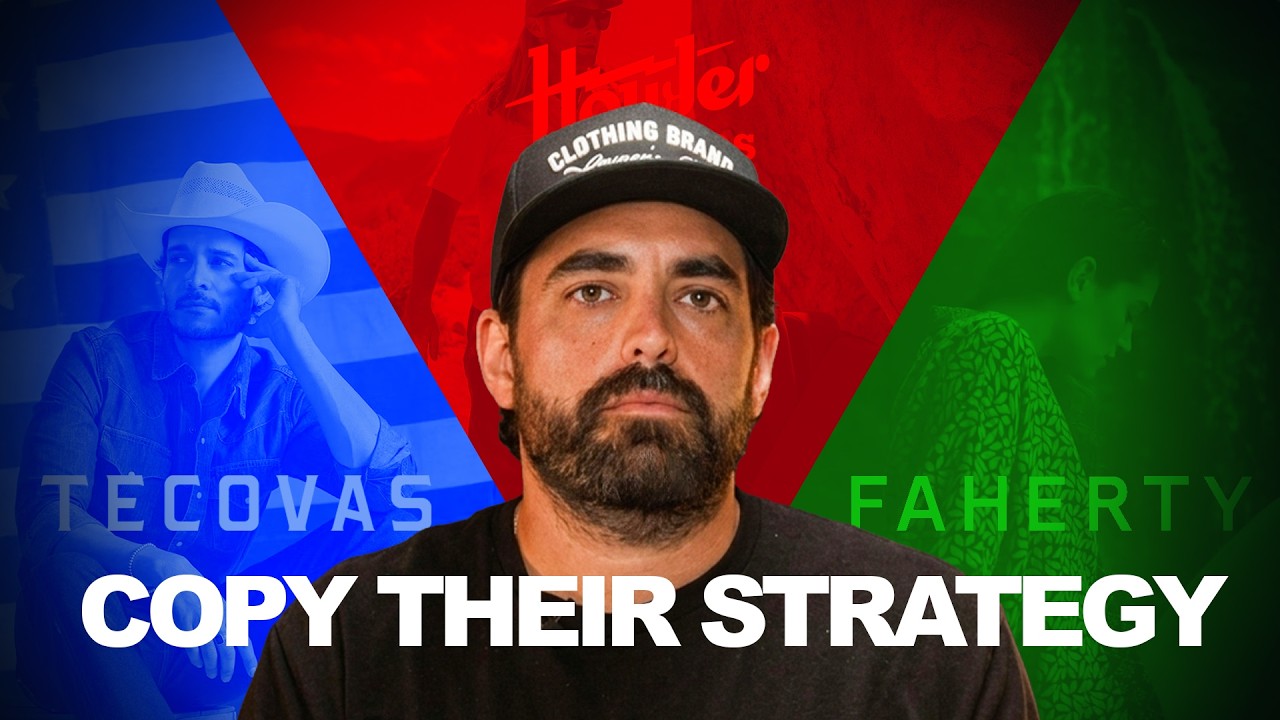
Why do customers talk about brands such as Roark, Howler Brothers, Seager Co., Sendero Provisions, Faherty, and Tecovas as enthusiastically as they talk about their favourite bands?
The answer is not simply better advertising.
It is not more professional product photography, a larger email list, or the latest Shopify app.
Those things can certainly help a clothing brand grow. However, they are downstream elements of the business. Before successful clothing brands optimise their advertising, website, emails, or conversion rates, they make a more important strategic decision:
They establish a clear brand identity.
They know:
-
Who the brand is for
-
What the brand stands for
-
What cultural world the brand belongs to
-
What identity customers adopt when they wear the clothing
This brand identity becomes the foundation for customer loyalty, community, word-of-mouth marketing, organic growth, and stronger advertising performance.
In this article, we will examine three strategies that successful clothing brands use to create that foundation—and how you can apply the same principles to your own brand.
Why Better Ads Will Not Fix an Unclear Clothing Brand
When a clothing brand is not growing, the owner will often assume the problem is tactical.
They may believe they need:
-
Better Facebook or Instagram ads
-
A stronger email automation sequence
-
New product photography
-
A redesigned Shopify store
-
A different discount strategy
-
Another app to improve conversions
These areas matter. A slow website, weak product page, poorly structured email campaign, or ineffective advertisement can certainly cost a brand sales.
The problem is that none of these tactics can compensate for an unclear identity.
You can create technically perfect advertisements and still struggle to grow if customers do not immediately understand why your brand matters.
You can send beautifully designed emails and still generate disappointing sales if subscribers do not feel connected to what the brand represents.
You can produce premium clothing and still be overlooked if customers cannot distinguish your business from hundreds of similar brands.
Advertising, email marketing, conversion rate optimisation, and website design amplify what already exists. When the brand identity is strong, these tools communicate and distribute that identity more effectively.
When the identity is weak, they simply amplify a vague message.
This is why the most important clothing brand strategy begins upstream.
Before asking how to reach more people, determine what you want those people to discover when they find you.
The Real Competitive Advantage: A Distinctive Brand Identity

A clothing brand is more than a collection of garments.
At its strongest, it is an identity customers can recognise, adopt, and share with others.
Successful clothing brands understand that people rarely buy clothing based solely on fabric, fit, or function. They also buy what the clothing allows them to express.
A customer may be expressing:
-
Adventure
-
Independence
-
Rebellion
-
Refinement
-
Creativity
-
Sustainability
-
Nostalgia
-
Cultural belonging
-
Confidence
-
Connection to a particular place or lifestyle
The clothing becomes a visible symbol of that identity.
This does not mean product quality is unimportant. The product must fulfil its promise. However, quality alone is rarely enough to create a loyal community.
Many brands sell quality basics. Many offer premium streetwear. Many sell outdoor clothing.
These descriptions explain the products, but they do not establish a distinctive world around them.
Winning clothing brands take three additional steps:
-
They sell a world, not merely products.
-
They own a subculture, not merely a category.
-
They build a community before chasing reach.
Strategy 1: Sell a World, Not Just Clothing

The strongest clothing brands do not simply present collections. They build worlds customers want to enter.
A brand world includes the places, values, aesthetics, characters, stories, activities, and attitudes associated with the company.
The products become an entry point into that world.
How Roark Uses Storytelling to Build a Brand World
Roark does not position itself as another company selling shirts, jackets, and trousers.
Its collections are developed around travel stories. A fictional character named Roark appears in different parts of the world, and the clothing is presented as though it were inspired by—or collected during—those adventures.
The products are therefore not shown as isolated items. They become artefacts from a larger journey.
Customers are invited into a world characterised by exploration, unpredictability, danger, purpose, and the road less travelled.
That world gives the products context.
A shirt is no longer just a shirt. It represents a way of approaching life.
This is one reason story-driven clothing brands can develop much stronger emotional connections than brands that rely entirely on product specifications.
How Howler Brothers Sells Exploration and Misadventure
Howler Brothers also demonstrates the power of creating a recognisable world.
The brand was inspired by a surf trip to Costa Rica, and its name comes from the howler monkey. Its identity draws from surfing, fly fishing, travel, music, art, exploration, and what the brand describes as misadventure.
These elements appear throughout its products, visual identity, storytelling, and marketing.
When customers buy from Howler Brothers, they are not simply purchasing another outdoor shirt. They are participating in a lifestyle shaped by curiosity, freedom, movement, and adventure.
That is considerably more compelling than describing a product as “premium outdoor clothing.”
One is a world.
The other is a category description.
Why Brand Worlds Create Stronger Customer Connections
A clear brand world gives customers something larger to identify with.
It also makes many marketing decisions easier.
When your world is clear, you have stronger direction for:
-
Collection concepts
-
Photography locations
-
Models and ambassadors
-
Product names
-
Website copy
-
Email campaigns
-
Social media content
-
Packaging
-
Retail store design
-
Collaborations
-
Events
-
Customer experiences
Every part of the brand can reinforce the same identity.
Without a clearly defined world, brands often create disconnected campaigns. One collection appears minimalist. The next leans heavily into streetwear. The following campaign suddenly focuses on travel or sustainability.
Each campaign may look attractive by itself, but together they fail to build recognition.
Consistency does not require every campaign to look identical. It means every campaign should feel as though it belongs to the same world.
Ask This Question About Your Clothing Brand
What world does your ideal customer want to live inside?
Consider:
-
What places define that world?
-
What activities happen there?
-
What music, art, films, or cultural references belong in it?
-
What values guide the people within it?
-
How do they speak?
-
What do they reject?
-
What version of themselves do customers become when they wear your clothing?
The clearer your answers become, the easier it will be to develop a distinctive clothing brand.
Strategy 2: Own a Subculture, Not Just a Product Category

The second strategy winning clothing brands use is specificity.
They do not attempt to serve everyone who might be interested in clothing, fashion, outdoor activities, or casual style.
They establish a position within a particular subculture.
A product category tells people what you sell.
A subculture tells them who the brand belongs to.
For example:
“We sell outdoor clothing” describes a category.
“We create clothing for people who grew up surfing in Southern California but feel equally at home riding horses through the desert” describes a cultural intersection.
The second position is narrower, but it is also more memorable.
How Seager Co. Owns the Surf-Meets-Western Intersection
Seager Co. began with three college friends, approximately $250, and a small run of T-shirts.
The founders had grown up around surfing but were also fascinated by classic Western films and the spirit of the American West.
Instead of choosing between surf culture and Western culture, they built a brand at the intersection of both.
That combination became Seager’s territory:
Southern California surf culture meets the ruggedness of the Old West.
This positioning works because it is specific.
There are many surf brands.
There are many Western brands.
Far fewer brands authentically connect those two worlds.
When someone who loves both coastal culture and Western imagery discovers Seager, the brand can feel as though it was created specifically for them.
That feeling is extremely powerful.
Customers do not merely think, “I like this shirt.”
They think, “These are my people.”
How Sendero Provisions Connects With the American West
Sendero Provisions also occupies a clearly defined cultural territory.
Rather than positioning itself broadly as an outdoor apparel company, it draws inspiration from the landscapes, stories, humour, and culture of the American West.
This is not merely an aesthetic choice.
It creates a recognisable identity for people who feel connected to the land, history, toughness, and independent spirit associated with the West.
The brand can then build products and content that repeatedly reinforce that connection.
How Tecovas Remains Anchored to Western Identity
Tecovas initially became known for cowboy boots, but its opportunity extended beyond one product category.
The company recognised that cowboy boots represented a broader culture: Western wear and the evolving identity of the American West.
Instead of treating Western style as a temporary trend, the brand remained anchored to a larger mission of honouring the West while helping shape its future.
That distinction matters.
Trends encourage brands to copy whatever appears popular at the moment.
Identity gives a brand a stable position from which it can evolve.
A clothing company with a strong identity can introduce new products without confusing customers because the products remain connected to the same cultural foundation.
Why Narrow Positioning Can Produce Broader Growth
Many clothing brand owners resist specificity because they fear excluding potential customers.
They believe a broad message will attract more people.
In practice, broad positioning often creates the opposite result.
When a brand tries to appeal to everyone, its message becomes generic:
-
Premium quality
-
Designed for everyday life
-
Fashion meets comfort
-
Clothing for every occasion
-
Made for people who value style
These statements may be technically accurate, but almost any clothing brand could use them.
They give customers no compelling reason to remember one business over another.
A clearly defined subculture makes the brand easier to recognise, describe, and recommend.
Customers can tell their friends:
“This is the brand for people like us.”
That is the beginning of organic growth.
Find the Intersection Your Brand Can Own
The strongest positioning frequently exists at the intersection of two or more interests, values, lifestyles, or cultural influences.
Your territory might combine:
-
Coastal living and tailored menswear
-
Streetwear and motorsport culture
-
Sustainable fashion and minimalist travel
-
Vintage workwear and modern urban design
-
Athletic clothing and creative culture
-
Western heritage and contemporary women’s fashion
-
Music culture and premium casualwear
The goal is not to combine random ideas for the sake of appearing different.
The combination must be authentic to the founders, products, and customers.
Ask:
What subculture does our clothing brand genuinely belong to?
Then go deeper.
Do not stop at “outdoor enthusiasts,” “busy women,” “modern men,” or “fashion-conscious customers.”
Identify the attitudes, experiences, interests, and cultural connections that make your audience distinct.
Strategy 3: Build Community Before Chasing Reach

The third strategy is one of the most frequently overlooked.
Winning clothing brands build community before they chase mass reach.
There is a major difference between having followers and having a community.
Followers consume content.
Community members participate.
Followers may like a photograph.
Community members discuss the brand, attend events, collect releases, introduce friends, share stories, and defend what the brand represents.
A large audience can be useful. However, audience size alone does not guarantee loyalty or sales.
A smaller group of highly engaged customers can create far more momentum than a large group of passive followers.
How Strong Brands Give Their Communities an Identity
Seager refers to its community as “The Herd.”
That language appears directly within the brand’s ecosystem. It gives customers a name and a shared identity.
Howler Brothers has developed loyal customers who do not merely purchase occasional products. Some follow and collect new releases because each collection feels like another contribution to the world they already value.
The important point is not that every clothing brand needs a catchy nickname for its customers.
The point is that successful brands make customers feel they belong to something.
Community forms when people recognise that the brand represents their values, interests, or way of seeing the world.
How Faherty Built Something Worth Gathering Around
Faherty provides another useful lesson in long-term brand development.
The twin brothers behind the company reportedly spent years preparing before fully launching the brand. One developed experience in fashion and design, while the other built financial expertise.
They worked on the products, suppliers, positioning, and story before attempting to scale.
This preparation helped them create something coherent enough for a community to gather around.
The lesson is not that every founder must wait twelve years before launching.
It is that speed cannot replace clarity.
Launching quickly with an unclear customer, inconsistent product line, and generic message usually creates more problems to correct later.
A strong community needs a stable foundation.
Brand Consistency Builds Trust
Tecovas reportedly faced a point at which its identity became diluted by more generic retail messaging.
The response was to restore a consistent brand voice across stores, channels, and campaigns.
This illustrates an important truth about community building:
Trust depends on consistency.
Customers should encounter the same central identity through:
-
Your Shopify store
-
Product descriptions
-
Instagram content
-
Email campaigns
-
Customer service
-
Packaging
-
Paid advertising
-
Retail environments
-
Brand partnerships
-
Post-purchase communication
This does not mean copying and pasting the same sentence everywhere.
It means maintaining the same voice, story, values, and cultural position.
When one channel sounds adventurous and irreverent while another sounds formal and corporate, customers receive mixed signals.
When the brand behaves differently every week, people struggle to understand what it stands for.
Consistency helps customers recognise the brand, trust it, and introduce it to others.
How Brand Identity Improves Clothing Brand Marketing

Brand identity is not separate from performance marketing.
It improves performance marketing.
When customers immediately understand who a brand is for and what it represents, every downstream activity has a stronger foundation.
Advertising Becomes More Relevant
A brand with a distinctive identity can create advertisements around specific attitudes, aspirations, and cultural references.
Instead of advertising “high-quality shirts,” it can communicate the world the customer enters when wearing them.
That produces stronger creative concepts and clearer audience relevance.
Email Marketing Becomes More Engaging
Email campaigns no longer need to rely entirely on discounts or product announcements.
The brand can tell stories, explore cultural influences, introduce collection themes, share customer experiences, and deepen the community’s connection to the brand.
Product Pages Become More Persuasive
Strong product pages communicate more than features.
They explain how each product belongs within the brand’s world and why it matters to the intended customer.
The materials, fit, construction, and practical benefits remain important. The identity gives those details context.
Organic Content Becomes Easier to Produce
Brands often struggle with social media because they think every post must directly sell a product.
A clear brand world creates a much broader content territory.
The company can produce content about:
-
Places
-
People
-
Music
-
Art
-
Adventures
-
Customer stories
-
Cultural history
-
Design influences
-
Behind-the-scenes decisions
-
Community events
-
Shared values
The brand becomes a source of culture rather than a catalogue that repeatedly asks people to buy.
Word-of-Mouth Marketing Becomes More Natural
People recommend brands they can describe.
A vague brand is difficult to explain.
A specific brand gives customers a story to share:
“This company combines Southern California surf culture with the Old West.”
“This brand makes clothing inspired by travel and dangerous adventures.”
“This is a modern Western company that genuinely understands the culture.”
Clarity makes the brand easier to remember and easier to recruit others into.
Three Questions Every Clothing Brand Should Answer

Before investing more heavily in advertising, email marketing, or website optimisation, answer these three questions.
1. What World Does Your Brand Live Inside?
When someone purchases your clothing, what version of life are they stepping into?
Define:
-
The values
-
The aesthetics
-
The locations
-
The experiences
-
The activities
-
The emotional tone
-
The cultural references
-
The people who belong there
Do not limit this exercise to colours, fonts, and photography styles.
You are defining the emotional and cultural world surrounding your products.
2. What Subculture Does Your Brand Belong To?
Avoid broad categories such as:
-
Outdoor people
-
Casual fashion
-
Modern women
-
Stylish men
-
Active customers
Identify the specific intersection your brand can authentically own.
What do your best customers have in common beyond age, gender, and income?
What do they care about?
What experiences shaped them?
What identity are they trying to express?
What makes them feel recognised?
The aim is not to invent a fictional audience. It is to understand your real customers at a deeper level.
3. Does Your Brand Communicate the Same Identity Everywhere?
Review every major customer touchpoint:
-
Homepage
-
About page
-
Product pages
-
Social media profiles
-
Advertisements
-
Email campaigns
-
Packaging
-
Customer support
-
Retail displays
-
Collaborations
Does the brand sound like the same company everywhere?
Does each channel reinforce the same world, values, and story?
Could someone view one piece of content without seeing the logo and still recognise the brand?
Consistency is what transforms occasional followers into a genuine community.
What to Do Before Spending More on Marketing

Before increasing your advertising budget, installing another app, or redesigning your store, assess the strength of your brand identity.
Complete these steps:
Define Your Ideal Customer at the Identity Level
Go beyond demographics.
Knowing that your customer is a 25-to-40-year-old professional is not enough.
Determine:
-
How they see themselves
-
How they want others to see them
-
What communities they belong to
-
What they value
-
What they aspire to become
-
What they refuse to compromise on
-
What role clothing plays in their identity
Write a Clear Brand Position
Complete this sentence:
We are the clothing brand for people who __________.
The answer should be specific enough to exclude people who are not a natural fit.
That may feel uncomfortable, but meaningful positioning requires choice.
Define Your Brand World
Document the places, values, activities, stories, and visual references that belong within your brand.
Also document what does not belong.
Clear boundaries prevent the brand from drifting towards every new aesthetic or trend.
Audit Your Customer Touchpoints
Examine your website, emails, advertisements, packaging, and social media.
Identify messages or visuals that feel generic, inconsistent, or disconnected from the brand identity.
Then bring each touchpoint back into alignment.
Create Opportunities for Participation
Do not treat customers as an audience that only receives promotions.
Give them opportunities to:
-
Share their stories
-
Submit photographs
-
Attend events
-
Participate in launches
-
Join conversations
-
Meet other customers
-
Contribute feedback
-
Celebrate the lifestyle surrounding the brand
Community is built through participation, not broadcasting alone.
Identity Is the Foundation That Makes Everything Else Work

The clothing brands that develop loyal customers do not win simply because they run more advertisements or use better software.
They win because their brands mean something.
They sell a world customers want to enter.
They establish a clear position within a recognisable subculture.
They build communities around shared values and identities.
They communicate consistently across every customer touchpoint.
Once those foundations are in place, everything downstream becomes more effective.
Advertisements become more relevant.
Emails become more engaging.
Product pages become more persuasive.
Organic content becomes more distinctive.
Customers become more likely to return, recommend the brand, and recruit others into the community.
Your brand is not merely a product line.
It is an identity.
The clearer that identity becomes, the easier it is for the right customers to recognise that your clothing was created for people like them.
Build a Stronger Strategy for Your Clothing Brand

Are you struggling to define your ideal customer, establish a distinctive brand identity, or turn followers into a loyal community?
Book a free strategy session to examine your clothing brand’s positioning, marketing, and growth opportunities:
https://www.optimizedstoreowner.com/schedule-strategy-session






Share:
How Selling Less Made This Clothing Brand More Money
Every ESSENTIAL Shopify App Explained in 12 Minutes (No BS)