

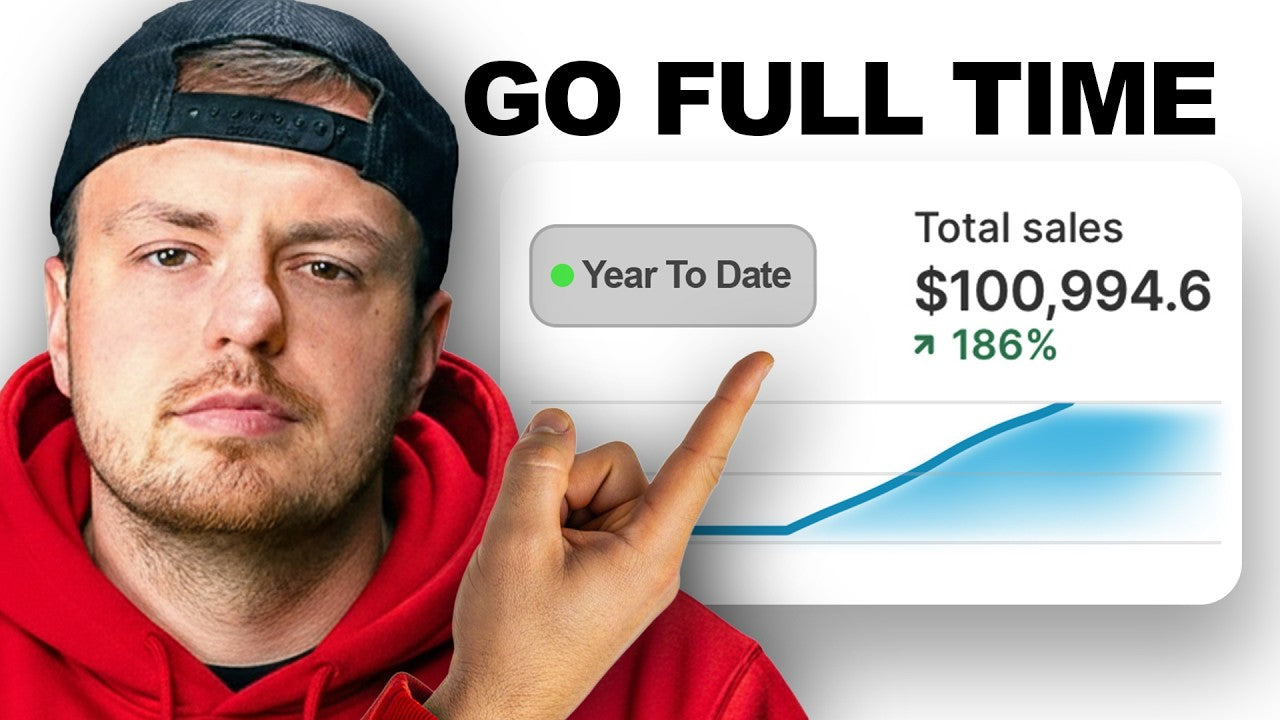
Most clothing brands don’t actually fail.
They get sales. They have a few exciting months. They post content. They launch new products. They run promos. They hustle.
But they never crack the one thing that turns a “side hustle brand” into a full-time business:
Predictable sales.

And without predictability, you’ll always feel like you’re one bad week away from starting over.
In the transcript you shared, Aaron from BitBranding breaks down the real issue: brands aren’t broken—they’re random. Random marketing. Random product strategy. Random traffic. Random “try this” tactics. That randomness creates occasional spikes… but no reliable engine.
Let’s unpack what’s really going on—and the simple system that removes chaos from your brand so revenue becomes repeatable.
The Real Reason Clothing Brands Fail: Randomness, Not Lack of Effort

If you’ve ever had one great month followed by a disappointing one, you already know this pain:
-
A launch pops off… then nothing.
-
A reel performs… but doesn’t translate into consistent orders.
-
One product sells out… but the rest of the site sits.
-
You’re always pushing—yet income feels unstable.
The transcript nails it:
The most “brain space killing” problem isn’t getting sales. It’s getting consistent sales. Random good months are exciting, but they’re also exhausting—because you don’t know if it will happen again.
That’s why brands stall:
-
Not because they’re lazy
-
Not because they’re untalented
-
Not because the product is “bad”
But because they’re pulled in too many directions with no clear order of operations.
Why Clothing Brands Fail Even When They Have Great Products
Many entrepreneurs assume why clothing brands fail comes down to product quality or lack of effort. In reality, most brands struggle because they lack a repeatable system for attracting customers and generating consistent revenue. Understanding why clothing brands fail helps founders focus on building reliable processes instead of constantly chasing the next marketing trend.
Strong clothing brand marketing isn't about trying every platform at once. It's about creating a clear message, attracting the right audience, and following a proven clothing brand strategy that supports long-term growth instead of short-term spikes.
A Real Example: How Maddie Went From ~$10K on the Side to $100K Months
Aaron shares the story of Maddie Bing, founder of This Is My House—a brand bringing back the classic “house dress” with modern upgrades: better fabric, cuter prints, and bigger pockets.
In early stages, Maddie’s numbers looked like many small brands:
First-year snapshot (2024)
-
Around $69,000 total sales across the year
-
Roughly 15% returning customer rate
-
It was still a side hustle, not a predictable full-time income
Then the shift happened after she joined BitBranding (mid-2024).
What changed after focusing on a system
-
Returning customer rate jumped to ~23%
-
Average order value increased
-
Orders fulfilled passed 2,000
-
She hit months like ~$101,000 in July
But here’s the key detail: before the system, sales spiked… but weren’t consistent.
And that inconsistency is what keeps most brand owners stuck.
Why Sales Spikes Don’t Mean You’re “Winning”

A big month can fool you.
It creates momentum emotionally—but not operationally.
Because if your revenue is unpredictable:
-
you can’t forecast inventory confidently
-
you can’t hire help
-
you can’t pay yourself consistently
-
you can’t scale ads safely
-
you can’t quit your job without fear
In other words: your brand can’t become your full-time income.
This is where most clothing brands live:
just enough sales to keep going, not enough predictability to go all-in.
The Fix: Remove Chaos With the “6x1 Rule”
The transcript introduces a simple scaling principle Aaron calls the 6x1 Rule—a focus framework designed to eliminate randomness.
The 6x1 Rule (the foundation of predictable growth)
1) One audience
Stop trying to sell to everyone. Choose a specific buyer profile you can speak to clearly.
2) One message
What do you stand for—and why should this audience buy from you (and not someone else)?
3) One traffic source (to master first)
You can have multiple traffic sources eventually, but scale usually comes from getting excellent at one first.
4) One offer
Not “a bunch of discounts.” Not “everything for everyone.” One clear, compelling offer that anchors your marketing.
5) One winning product
You don’t need 50 SKUs. You need one anchor product that drives the majority of your momentum and makes the decision easy.
6) One year of commitment
This is the part most brands skip. They want results faster, so they pivot constantly—which creates more randomness.
If you want predictable sales, you have to stop resetting your strategy every month.
The Shift That Changes Everything: Motion → Clarity

Aaron describes the “before” state as something most brand owners recognize:
-
products are selling
-
content is being posted
-
promotions are happening
…but growth feels fragile.
That’s motion without clarity.
The first real change: slow down to build a foundation
Before scaling, the brand focused on:
Once that happened, results stopped feeling random and started feeling repeatable.
Systems Over Tactics: Why Most Brands Stay Stuck

This line matters:
Most brand owners already know they should:
-
post content
-
build email
-
create offers
The problem isn’t knowledge.
The problem is no framework to execute those tactics in the right order.
So brands jump between:
-
“Let’s try TikTok”
-
“Let’s run a giveaway”
-
“Let’s add 12 new products”
-
“Let’s discount everything”
-
“Let’s hire an influencer”
It feels productive… but it’s usually just noise.
Predictability comes from systems.
The “Ecom Accelerator Framework” That Builds Predictable Revenue

Aaron lays out a framework used to organize the chaos into a clean growth engine.
Build a Clothing Brand Website That Supports Long-Term Growth
Your clothing brand website is more than an online catalog. It's the foundation of every sale, marketing campaign, and customer interaction. A high-converting clothing brand website should clearly communicate your value, highlight your best products, and guide shoppers toward taking action.
As your business grows, your clothing brand website should support email marketing, product launches, customer retention, and conversion optimization. Without a strong website, even the best advertising campaigns struggle to produce predictable results.
Step 1: Website (Build the conversion foundation)
Your website isn’t a “portfolio.” It’s a sales machine.
Key takeaway from the transcript:
-
Use a static hero section (not a carousel, not a video)
-
Make it instantly clear:
-
who it’s for
-
what problem you solve
If people have to think too hard, they leave.
Step 2: Traffic (Organic and paid)
It’s no longer “organic vs paid.”
For scalable growth, it must be organic and paid.
Simple method Aaron describes:
-
create organic content first
-
identify what performs
-
turn the winners into paid ads
This reduces guesswork and makes ad spend more efficient.
The Ecommerce Growth Strategy Behind Predictable Sales
Many successful brands don't rely on luck. They follow a proven ecommerce growth strategy that combines organic content, paid advertising, email marketing, and customer retention. A balanced ecommerce growth strategy allows brands to generate traffic while increasing customer lifetime value over time.
Instead of chasing every new platform, focus on building an ecommerce growth strategy that creates sustainable momentum across multiple marketing channels. This approach reduces risk and makes growth easier to forecast.
Step 3: Profit (Email marketing)
Most clothing brands ignore email—then wonder why they’re stuck.
Aaron’s blunt rule:
-
send 2–3 emails per week
-
stay top-of-inbox
-
brands who send more (strategically) make more
Email turns one-time buyers into repeat customers—which boosts predictability.
Step 4: Customer Experience (Retention is sales)
Shipping, packaging, customer support—this is not “extra.”
If the experience declines, returning customer rate drops… and so do sales.
Predictability is easier when customers come back.
Step 5: Branding & Messaging (Brand = association)
This is a powerful definition from the transcript:
Branding is association (pairing).
You pair your product with a specific world—an identity, lifestyle, or tribe—and the market decides what that means.
If your associations don’t match your buyer, your “branding” won’t land—no matter how good the logo looks.
Clothing Brand Marketing vs. Fashion Brand Marketing
Effective clothing brand marketing starts with understanding exactly who your customers are and why they buy from you. Every campaign should reinforce your positioning, product value, and brand identity.
At the same time, fashion brand marketing goes beyond promoting products. It creates emotional connections through storytelling, lifestyle content, community building, and consistent messaging. When fashion brand marketing and clothing brand marketing work together, brands are far more likely to build loyal audiences and repeat customers.
How to Grow a Clothing Brand Without Chasing Every Trend
Many founders ask how to grow a clothing brand without spending massive amounts on advertising. The answer isn't finding a secret growth hack. Learning how to grow a clothing brand starts with improving your website, refining your messaging, building repeatable marketing systems, and increasing customer retention.
If you're wondering how to grow a clothing brand, focus on mastering one traffic source, one core offer, and one ideal audience before expanding into new channels.
Behind the Scenes: Why This Works Without Being “Flashy”

One of the most important myths the transcript destroys:
You don’t need:
-
a massive following
-
to become an influencer
-
to spend thousands per day on ads
This works because it’s simple, focused, and repeatable.
Nothing “exploded overnight.”
Instead, momentum compounded:
-
systems locked in
-
revenue became reliable
-
growth became sustainable
And once income became predictable, quitting a job wasn’t a risky leap—it was a confident decision.
Clothing Brand Growth Comes From Consistency
Real clothing brand growth doesn't happen because of one viral post or successful launch. Sustainable clothing brand growth comes from improving every part of the customer journey, including your website, marketing, retention, and product experience.
Brands that prioritize long-term clothing brand growth build systems that continue generating results even after a promotion ends. That's the difference between temporary success and a scalable business.
What You Should Take Away (If You’re Serious About Going Full-Time)

If your brand feels inconsistent, don’t automatically assume you need:
-
better content
-
more products
-
a new platform
-
another strategy
Start here instead:
Your real job is to remove randomness.
And you do that by:
-
narrowing your focus (6x1 rule)
-
building a foundation (website clarity)
-
running traffic the right way (organic → paid)
-
using email to create profit + stability
-
protecting customer experience to drive repeat purchases
That’s how you stop feeling like you’re guessing and start operating like a brand that can scale.
How to Scale a Clothing Brand With Predictable Sales
If your goal is predictable clothing brand sales, your priority shouldn't be launching more products or running more discounts. Instead, focus on creating repeatable systems that generate consistent traffic, conversions, and returning customers. Predictable clothing brand sales make it easier to forecast inventory, hire team members, and invest confidently in marketing.
Learning how to scale a clothing brand requires discipline and focus. Rather than chasing every opportunity, successful founders improve one area of the business at a time while following a clear clothing brand strategy. That's ultimately how to scale a clothing brand into a business that delivers predictable clothing brand sales month after month.
Ready to Make Your Sales Predictable?
If you want help building a system like this—so your clothing brand becomes more than a side hustle and turns into real, reliable income—book a free strategy session here:
No pressure. Just a conversation to map out what predictable growth could look like for your brand.


Share:
Instagram Strategies For Clothing Brands 2026
3 Website Details Decide If You Look PREMIUM