

Intro: $1 Million in 30 Days (Yes, Really)
This clothing brand generated over $950,000 in just 30 days, and with a slight adjustment in inventory capacity, it would have comfortably crossed the $1 million mark.
More importantly, this was not the result of a viral fluke, influencer lottery, or a one-time gimmick. It was the outcome of a repeatable framework that we have used across multiple seven-figure brands. The difference this time was discipline, execution, and restraint.
I am going to walk you through exactly how this happened—from the product decisions to the ad account structure to the Shopify dashboard numbers. Full transparency: this framework will work for most clothing brands, but only a small percentage of people will actually implement it correctly. The system is simple, but it is not easy.
If you are willing to commit to focus, patience, and execution, this framework has the potential to fundamentally change the trajectory of your brand.
The Context Most Brand Owners Ignore

Before discussing ads, creative, or scaling, context matters.
Most clothing brand owners start in one of two places:
-
They try to launch as many designs as possible, hoping something “sticks.”
-
They copy what other successful brands are doing, changing 5–10% and hoping that proximity to success transfers results.
This brand’s founder tried both approaches. Neither worked.
The problem was not effort. The problem was direction.
Throwing more designs into the market does not create clarity. Copying other brands without understanding why they work does not create differentiation. Both approaches lead to fragmented messaging, wasted ad spend, and inventory that does not move.
The brand we are discussing today made an early and critical decision:
They would not look like everyone else.
This was not a wholesale boutique reselling generic products. This was a brand built around embroidery, customization, and out-of-the-box design thinking. That decision alone created the foundation for everything that followed.
Most Brand Owners Get This One Thing Wrong

Winning in fashion is not about being marginally better. It is about being visibly different.
This is where the concept of hero features, also known as form factor, becomes critical.
Ask yourself:
-
What physically stands out about your product?
-
Can someone understand what makes it different in under three seconds?
-
Does it look different enough to stop a scroll?
In crowded markets, attention is the bottleneck. The easier it is to visually communicate uniqueness—through materials, design, embroidery, or construction—the easier it is to win.
Here is the key takeaway:
It is better to be different than to be better.
When you can be both, you have a home run.
This brand achieved that by committing to a design language and product concept that was immediately recognizable.
The One-One-One Framework That Drove $1M in 30 Days

At the core of this success is what we call the One-One-One Framework:
-
One audience
-
One offer
-
One message
-
One traffic source
-
One winning product
-
One year of focus
This framework eliminates complexity and forces clarity.
Let’s break it down.
Step One: The Avatar (Who You Are Selling To)
Nothing scales until you know exactly who you are talking to.
This brand did not try to sell to “everyone.” They went after one specific customer avatar.
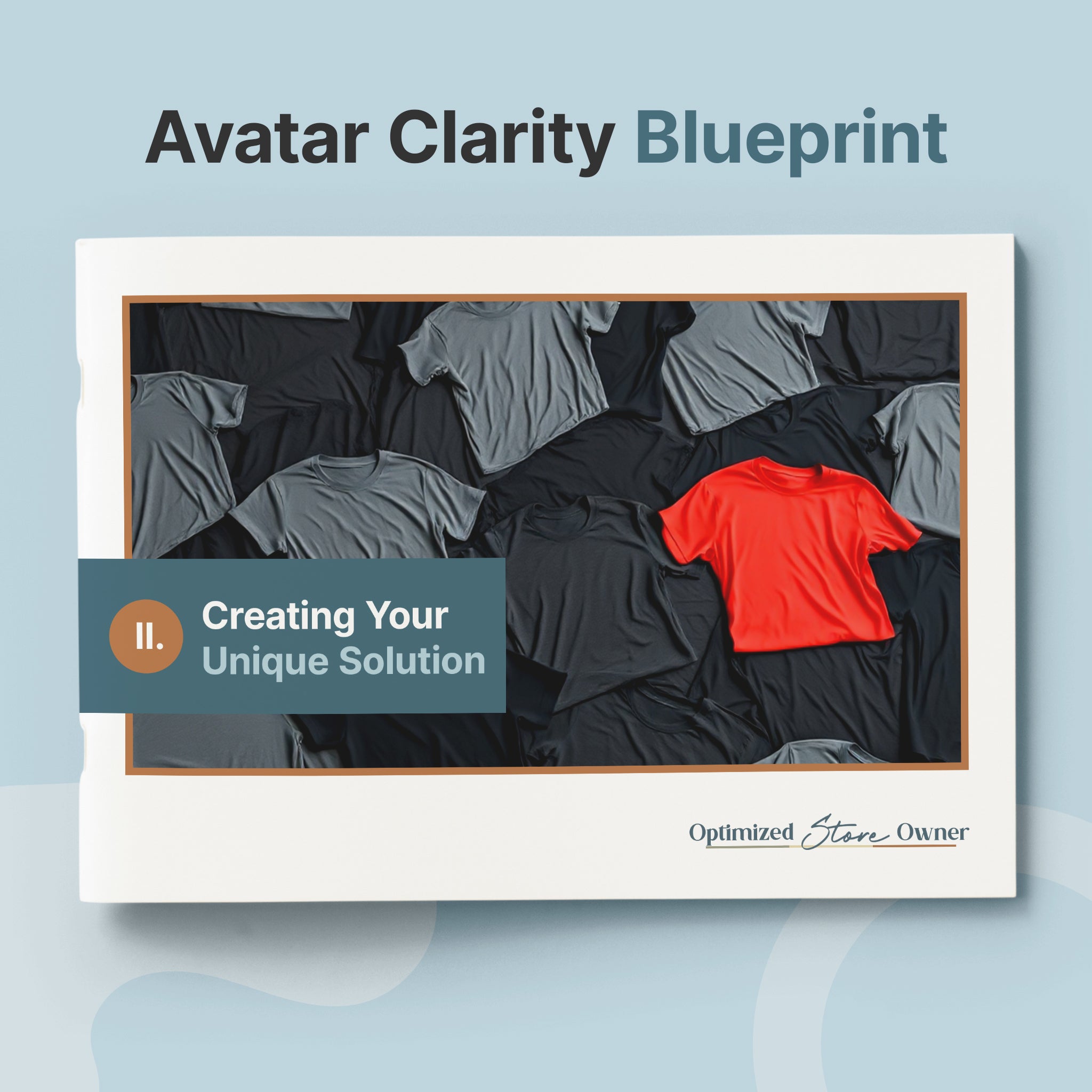
To define that avatar, we use three internal documents:
-
The Struggling Avatar
-
The Unique Solution
-
The Future Pace Hero
The Struggling Avatar
This is the person before your product.
They have a real emotional or functional problem. In this case, it was not just clothing. It was identity, pride, and connection—especially for moms who wanted a meaningful way to support their children while still wearing something stylish.
If you cannot articulate the problem clearly, nothing else matters.
The Unique Solution
This is your product’s role in solving that problem.
For this brand, the solution was custom apparel—specifically embroidered jerseys and sweaters that allowed moms to wear their child’s number, season after season, in a premium, intentional way.
The Future Pace Hero
This is the customer after the purchase.
After wearing the product, the customer feels more confident, more connected, and more expressive. The product becomes part of their identity, not just their wardrobe.
This sequence—problem, solution, transformation—must be followed in that exact order.
Step Two: The Offer (You Cannot Scale Without One)
No brand scales without a compelling offer.
This does not always mean discounts, although discounts can work if margins allow. The key is perceived value.
For this brand, offers included:
-
Always-free shipping
-
Bundled products
-
Seasonal promotions
-
Limited-time drops
-
Occasional discounts during major retail moments (e.g., Black Friday)
The offer made customers feel like they were getting premium quality and a fair deal, without devaluing the brand.
Platforms like Meta reward good offers because good offers drive action. More action leads to more data, and more data leads to better optimization.
Step Three: The Message (Clear Beats Clever)
The message was not complicated.
This was a woman-owned, quality-first brand that rejected fast fashion and invested in craftsmanship, community, and fair labor.
The clarity of the message allowed the ads to do less work. Customers immediately understood what the brand stood for and why it existed.
One customer. One message. No confusion.
Step Four: One Traffic Source (Meta)
Nearly all of the revenue was driven through Meta ads—Facebook and Instagram.
Yes, Google contributed marginally, but Meta was the primary engine.
This matters because focus matters.
Instead of chasing TikTok, Pinterest, Snapchat, and every new platform, the brand mastered one channel deeply. This allowed for better data accumulation, faster learning, and more predictable scaling.
Step Five: One Winning Product
The hero product was a custom jersey-style sweater that allowed customers to add numbers representing their children.
It worked across multiple seasons:
-
Football
-
Basketball
-
Baseball
-
School spirit
That single product alone generated over $1 million in revenue.
The lesson here is simple:
You do not need dozens of products to scale. You need one that truly resonates.
Step Six: One Year of Focus
This is where most brands fail.
They chase ideas instead of results.
There is a famous quote: “If you give me 30 minutes, I can come up with enough ideas to kill my business.”
This brand did the opposite. They stayed still. They committed to one direction and refined it relentlessly.
That patience is what made the $1 million month possible.
Inside the Ads Manager: What Actually Drove the Sales
With the foundation in place, ads became a force multiplier.
Spend Overview
-
Meta: ~$7,500 per day
-
Google: ~$1,000 per day
-
Total: ~$8,500 per day
Yes, that means roughly $240,000 in ad spend to generate close to $1 million in revenue.
That is not a problem. That is leverage.
Diversification Is the Real Scaling Strategy

After Meta’s Andromeda updates, brands that relied on one static ad style collapsed.
This brand did not.
Why? Creative diversification.
We structured campaigns with:
-
One campaign
-
Multiple ad sets (each representing a concept)
-
Multiple creative variations within each concept
Creative Concepts Included:
-
Features and benefits
-
Headline-driven creatives
-
Lifestyle imagery
-
POV videos
-
Static images
-
Carousels
-
Reels
Different customers respond to different formats. Diversification ensures the algorithm always has something that resonates.
Performance Metrics That Actually Matter

-
Average Order Value: $200–$220 (dropped to ~$187 during discounts)
-
Cost per Purchase Target: ~$75
-
Actual CPA Range: $50–$75
-
Conversion Rate During BFCM: ~10%
-
Returning Customer Rate: ~48%
These are not hypothetical numbers. These are real Shopify dashboard metrics.
Dynamic Product Ads (DPA): The Silent Workhorse
Every seven-figure brand we have scaled uses DPAs.
For this brand:
-
DPA spend (30 days): ~$77,000
-
Reach: Over 1 million users
-
Performance: Above average
DPAs continuously update based on inventory and user behavior, making them extremely efficient once sufficient traffic volume exists.
The Role of AI (And Its Limits)
Approximately:
-
80% real content
-
20% AI-assisted variations
AI was used to scale creative output, not replace authenticity. It supplemented production, allowing faster testing and iteration without sacrificing brand feel.
The Shopify Reality Check: Did We Hit $1M?
Final 30-day revenue: $954,264
No, it technically did not cross $1 million. The reason had nothing to do with demand.
The constraint was inventory and labor. Everything was handmade. Scaling further would have required hiring additional staff immediately.
That is a good problem to have.
Black Friday Performance Snapshot
-
BFCM Revenue: ~$140,000–$160,000
-
Average Order Value: ~$160
-
Daily Average During Peak: ~$46,000
The brand intentionally pulled back ads to avoid fulfillment breakdowns.
Retention: The Overlooked Revenue Lever
In November alone, email capture and follow-up added ~$14,000 using Retention.com.
This came from visitors who never filled out a form. Automated nurturing flows turned lost traffic into real revenue.
The 80/20 Rule in Action
-
20% of products generated ~80% of revenue
-
Top customers drove repeat purchases
-
Fewer products, higher impact
This allowed the brand to focus inventory, creative, and messaging where it mattered most.
Final Thoughts: Why This Worked

This brand did not win because of hacks.
It won because of:
-
Focus over fragmentation
-
Clarity over cleverness
-
Systems over trends
-
Patience over impulse
The framework is simple:
One avatar.
One offer.
One message.
One traffic source.
One winning product.
One year of focus.
That is how you build a brand capable of generating a million dollars in 30 days—sustainably.
If you are willing to do less, but do it better, the results can be extraordinary.
Want a Clear Plan for Your Brand?
If this breakdown resonated with you, it is likely because you see pieces of your own brand in it—potential, but also confusion around what to focus on next.
You do not need more tactics. You need clarity.
A strategy session gives you the opportunity to step back and look at your brand through a proven framework. Together, we will identify:
-
Who your product is actually for
-
What offer makes sense for your margins and audience
-
Which product deserves your full attention
-
Whether your ads are set up to scale or stall
There is no pressure and no obligation. The goal is simply to help you see your business more clearly and decide on the smartest next move.
If you would like that level of guidance, you can schedule a strategy session here:
👉 Book a free strategy session:
https://www.optimizedstoreowner.com/schedule-strategy-session
If it makes sense to move forward together, we will discuss it. If not, you will still leave with clarity and direction.

Share:
Why Every Clothing Brand Is Wrong About Facebook Ads (Post Andromeda)
The Low-Effort Strategy That’s Blowing Up Clothing Brands