

In the ever-evolving landscape of e-commerce, one tactic has consistently stood out for its ability to drive conversions: urgency. However, not all urgency is created equal. While some strategies can foster trust and build long-term customer loyalty, others can come across as manipulative, damaging your brand’s reputation. This article dives into the art of creating genuine urgency, exploring ethical ways to motivate customers, enhance their shopping experience, and ultimately boost sales.

Why Genuine Urgency Works

At its core, urgency taps into the psychological phenomenon known as FOMO (fear of missing out). This innate human tendency compels customers to act quickly, ensuring they don’t miss an opportunity. However, there’s a fine line between leveraging urgency and making customers feel manipulated.
When executed authentically, urgency does more than just boost conversion rates. It fosters trust and loyalty, making shoppers feel good about their decision to purchase from your store. By focusing on transparency and truth, you can ensure that urgency becomes a positive force in your business strategy.
Avoiding Manipulative Tactics

Many stores fall into the trap of using fake timers or false scarcity, such as countdowns that reset when a customer refreshes the page. While these might yield short-term results, they erode trust in the long run. Customers are savvy and can quickly detect insincerity. Instead, aim for urgency tactics grounded in reality. The key is to prioritize transparency and value.
Effective Urgency Tactics for Shopify Stores

Here are five proven urgency tactics to ethically motivate customers and enhance their shopping experience:
1. Showcase Real-Time Inventory Levels
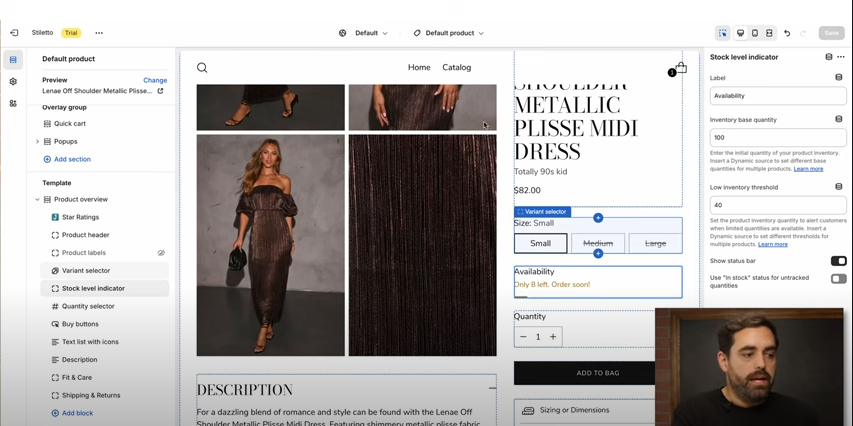
One of the simplest and most effective ways to create urgency is by displaying low stock alerts. For example, highlighting that only three items are left in a specific size can motivate shoppers to act quickly.

-
Why It Works: Customers perceive a genuine signal of demand without feeling pressured. For those who have a favorite item that often sells out, seeing limited availability can prompt faster decisions.
-
How to Implement:
-
Use themes like Stiletto, which offer built-in stock level indicators.
-
Alternatively, explore stock counter apps available on Shopify. However, avoid manipulating numbers, as this can damage trust.
-
Customize settings to define what constitutes “low inventory” based on your store’s metrics.
2. Exclusive Product Drops

Create urgency by offering limited-time product drops or preorders. For example, a collection might only be available until midnight on Sunday. By honoring these deadlines, you instill trust and build anticipation for future drops.
-
Why It Works: Limited-time availability creates a sense of exclusivity, prompting customers to act swiftly.
-
How to Implement:
-
Use Shopify Flow to automate product availability and removal based on specific time frames.
-
Announce product drops via email campaigns and social media to create buzz.
3. Seasonal or Event-Specific Promotions

Tie your urgency strategies to seasonal events or holidays, such as a “Spring Refresh Sale” or “Back-to-School Must-Haves.” Set clear end dates to maintain credibility and consider layering discounts to create a dynamic shopping experience.
-
Why It Works: Seasonal promotions feel natural and relevant to customers planning their wardrobes for upcoming events.
-
How to Implement:
-
Use countdown banners to highlight sale deadlines. Most Shopify themes offer this feature.
-
Update banners immediately after sales end to ensure they don’t display outdated information.
4. Highlight Shipping Deadlines

As the holiday season approaches, emphasize fast shipping deadlines. For instance, include a message like “Order within the next six hours to receive it by Christmas.”
-
Why It Works: Customers value fast gratification, especially for time-sensitive purchases.
-
How to Implement:
-
Add a static message beneath the “Add to Cart” button on product pages.
-
Ensure your logistics can support promised delivery times to avoid disappointing customers.
5. Leverage Social Proof in Real-Time
Displaying notifications of recent purchases or highlighting how many people are viewing a product can build trust and create urgency.
-
Why It Works: Social proof reassures shoppers that others are also interested in the same product, boosting confidence and prompting quicker decisions.
-
How to Implement:
-
Use apps that display real-time purchase data or visitor numbers. Ensure the data is accurate to maintain credibility.
Recommended Shopify Apps
To streamline the implementation of these tactics, consider using all-in-one apps like:
-
Vitals: This app offers over 40 features, including stock counters, countdown timers, and social proof tools, allowing you to bundle multiple urgency strategies.
-
Kit: With 30+ tools, Kit provides versatile solutions for creating urgency and enhancing your store’s functionality.
Key Principles for Ethical Urgency

The cornerstone of effective urgency is truthfulness. Here are some guiding principles to ensure your tactics remain ethical and effective:
-
Be Transparent: If you claim an item is limited, ensure it genuinely is.
-
Focus on Value: Highlight how your offer benefits the customer, whether it’s saving money, getting a product before it sells out, or improving their shopping experience.

-
Avoid Overuse: Too much urgency can feel overwhelming and detract from the overall shopping experience. Use these tactics sparingly and strategically.

Conclusion: The Path to Sustainable Sales Growth

Creating urgency isn’t just about boosting sales—it’s about fostering trust and enhancing the customer experience. By implementing genuine and transparent strategies, you can ethically motivate shoppers while building a loyal customer base. Remember, urgency is only one piece of the puzzle. To fully optimize your Shopify store, focus on creating a seamless, value-driven shopping experience.
By mastering these principles, your store can strike the perfect balance between motivating customers and maintaining their trust—setting the stage for long-term success.





Share:
27 Hours in NYC: Helping Clothing Brands Scale to $100K+
PROVEN Facebook Ads Strategy for Clothing Brands 2025