

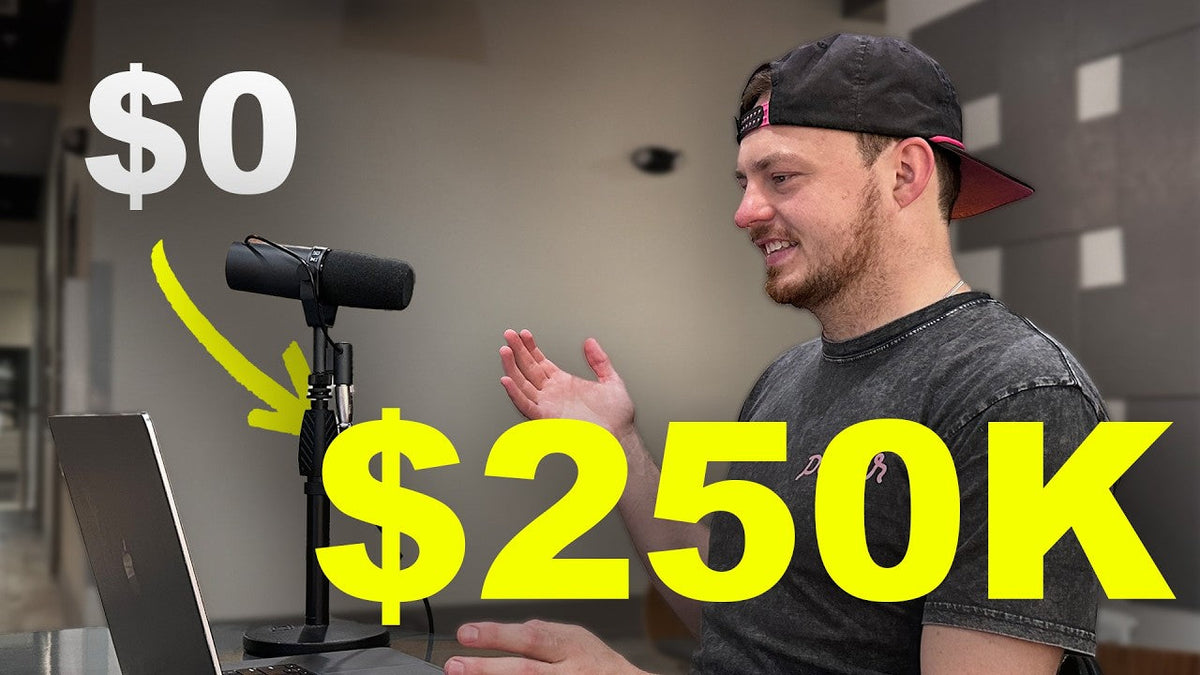
What does it actually look like when a purpose-driven streetwear brand hits $250,000 in revenue in just 30 days?
The brand Any Means Necessary did just that—and it wasn’t because of one viral video, a celebrity shoutout, or luck. It was the result of clear strategy, relentless testing, and purpose-led storytelling. This is the behind-the-scenes look at how they scaled fast, stayed grounded, and built not just revenue, but a loyal community.
The Brand: Blending Streetwear with Purpose

Any Means Necessary isn't just another streetwear brand—it’s a movement. At its core, the brand speaks to the mental battles many of us face: stress, anxiety, and self-doubt. Their message of resilience and authenticity has become a rallying cry, not just fashion.
Founded by Sean, the creative heart of the brand, and Mikey, the operations and strategy lead, the team has built a purpose-driven business that goes beyond just clothing. They're creating emotional connections through apparel, books, and content—and people are responding in a big way.
But it wasn't always smooth sailing.
From Struggles to Breakthroughs

Before they joined a coaching and growth program, Any Means Necessary was facing some common challenges many clothing brands can relate to:
-
Selling out of inventory before they could restock
-
Ad performance fluctuating unpredictably
-
Confusion around how to leverage platforms like TikTok Shop
But with strategic support, they were able to turn things around. This is the roadmap they followed—and what you can learn from their journey.
The Ecommerce Growth Strategy Behind the $250K Month
Reaching $250,000 in 30 days wasn't the result of one isolated tactic. The brand's ecommerce growth strategy combined storytelling, customer retention, creator partnerships, email marketing, and continuous creative testing.
The important lesson is that sustainable ecommerce growth rarely comes from relying on a single acquisition channel. Any Means Necessary built a system where content attracted new customers, post-purchase experiences strengthened relationships, and creators helped introduce the brand to new audiences. That connected approach made their ecommerce growth strategy more than a short-term sales push.
For clothing brands looking to scale, the goal should be to build several connected growth levers rather than searching for one tactic that suddenly unlocks revenue.
Step 1: Use Storytelling as a Growth Engine
The brand’s purpose-led messaging isn’t a marketing gimmick—it’s embedded in every customer touchpoint. Sean even wrote a book to accompany the clothing, deepening the message and mission behind every purchase.
But when the physical book sold out, they didn’t let that slow momentum. Instead, they created a digital PDF version that could be delivered instantly post-purchase, along with a heartfelt thank-you video from Sean himself. This not only helped reduce customer dissatisfaction with preorder delays—it turned a potential pain point into an emotional win.
Key Takeaway: Use moments of friction to build deeper customer relationships. A personal thank-you video, digital bonus content, or a simple explanation goes a long way.
Step 2: Build Post-Purchase Magic
One of the most underused moments in ecommerce is after the purchase. For Any Means Necessary, this became a goldmine. They implemented a post-purchase email flow that delivered the book, a discount code, and a video message.
The result? Hundreds of customers engaged with the email, felt appreciated, and began anticipating the next drop even more.
Building a Post-Purchase Email Flow
A post-purchase email flow gives brands an opportunity to continue the relationship after checkout instead of treating the transaction as the finish line.
In this case, the flow delivered the digital book, a discount code, and a personal video message. Each element gave customers another reason to engage with the brand after buying.
A thoughtful post-purchase email flow can include order-related information, educational content, product recommendations, exclusive offers, or personal messages. For clothing brands, this creates additional opportunities to turn a first purchase into a longer customer relationship.
But it didn’t stop there—they also added software called Retention.com, which helped them reclaim lost revenue and re-engage with nearly 5,000 new contacts.
In less than a month, this strategy alone brought in an extra $11,000.
Key Takeaway: Post-purchase isn’t the end of the journey—it’s the beginning. Add value after checkout to boost loyalty, referrals, and repeat purchases.
Step 3: Fix the Affiliate Funnel
Affiliate marketing can be a blessing or a mess depending on how you manage it. Initially, Any Means Necessary used a free version of an affiliate tool called GoAffPro. But they faced issues with coupon abuse and manual payouts.
Instead of scrapping the whole thing, they optimized it:
-
They started manually vetting affiliates to ensure only real ambassadors joined.
-
They considered upgrading the platform to automate payouts.
-
They developed a plan to reward top performers with higher commissions (rather than letting discount hunters game the system).
Building a More Sustainable Ecommerce Affiliate Marketing Program
The goal of ecommerce affiliate marketing isn't simply to recruit as many affiliates as possible. It is to build a network of partners who can consistently introduce the brand to relevant customers.
For Any Means Necessary, manually vetting affiliates helped reduce coupon abuse while giving the brand greater control over who represented it. A structured ecommerce affiliate marketing program can also use different commission levels to reward affiliates who generate genuine sales instead of simply distributing discount codes.
This approach turns affiliates into long-term brand partners rather than treating them as another source of one-off traffic.
Key Takeaway: Affiliate programs need structure. Don’t let automation lead to exploitation—vet your ambassadors, automate payments when you can, and incentivize your best promoters.
Step 4: Go Hard on TikTok Shop (the Right Way)

TikTok is a beast. And if you try to use it like Meta, you’ll get eaten alive. That’s exactly what Sean and Mikey realized when their repurposed Instagram ads flopped on TikTok.
So what was the unlock?
They didn't try to create all the content themselves. Instead, they built a creator army. By offering high commissions to TikTok creators who made videos featuring their products, they created a steady flow of authentic, user-generated content (UGC).
This not only gave them fresh creative for ads but helped the brand reach younger, more engaged audiences in a way that felt native to TikTok.
Why TikTok Shop Affiliate Marketing Worked - h4
The biggest opportunity wasn't simply being present on TikTok. It was turning creators into distribution partners through TikTok Shop affiliate marketing.
Instead of producing every video internally, the brand gave creators an incentive to showcase its products and earn commissions from resulting sales. This created a continuous stream of creator-led content while allowing the brand to reach audiences that might never have encountered its own social content.
For clothing brands, TikTok Shop affiliate marketing can connect three important pieces of the funnel: creators produce authentic content, shoppers discover products through native TikTok experiences, and successful creators have a financial reason to keep producing.
Turning Creator Content Into a UGC Marketing Strategy
The creator program also gave the brand something beyond direct TikTok Shop sales: a scalable UGC marketing strategy.
Creator videos can provide social proof, product demonstrations, try-ons, testimonials, and different perspectives on the same product. The strongest content can then become an additional creative asset for the brand's broader advertising strategy.
A good UGC marketing strategy doesn't require every creator to produce the same type of video. Different creators can communicate the product in different ways, giving the brand a larger library of authentic content to test and reuse.
Key Takeaway: You don’t need to make all your own TikTok content. Let creators earn commissions for promoting your brand—and reuse their best-performing videos in your own ad strategy.
Step 5: Creative That Converts
Ads are only as good as the content behind them. One of the biggest changes for Any Means Necessary was focusing on first-time impression rate. Most brands don’t even track this.
Here’s the idea: if your ad is showing to the same people over and over, it’s not scaling—it’s just annoying. If your first-time impression rate drops below 60%, that’s your signal to swap in fresh creatives.
They kept a steady rotation of new videos, hooks, and scroll-stopping formats that kept their ads working harder for longer.
Key Takeaway: Creative fatigue kills ads. Track first-time impressions, test new creatives weekly, and always keep your top-of-funnel fresh.
Step 6: Email That Doesn’t Feel Like Email
One of their highest-performing campaigns? A plain-text April Fools email claiming that Sean was leaving the company.
No images. No formatting. Just raw, emotional storytelling followed by a surprise 15% discount.
It felt like a personal message from a friend—not a sales pitch. And it worked.
Why Ecommerce Email Marketing Doesn't Have to Feel Promotional
Effective ecommerce email marketing isn't always about designing polished promotional campaigns. Sometimes the most effective message is the one that feels like it came directly from the person behind the brand.
The April Fools campaign worked because it used curiosity and personality before introducing the offer. This demonstrates an important principle of ecommerce email marketing: customers don't need every message to look like an advertisement. Storytelling, personality, timing, and relevance can make promotional emails feel much more natural.
Key Takeaway: Not all emails need to look like a brand campaign. Try plain text for emotional impact, use curiosity to drive clicks, and always tie the story back to a clear offer.
Step 7: Plan for Profit, Not Just Growth
Lastly, as Any Means Necessary prepares for their next phase of growth, their goal is simple:
Make each new drop more profitable before restocking.
That means designing intentional pieces (not just filler), using TikTok and email for customer acquisition—not just retention—and putting systems in place to manage higher volumes without burning out the team.
It’s not about chasing vanity metrics or ROAS anymore. It’s about healthy, scalable business practices.
What This Case Study Shows About Fashion Ecommerce Marketing
The biggest lesson from this case study is that fashion ecommerce marketing is no longer limited to running product ads and posting on social media. Growth can come from the entire customer journey, from creator discovery and storytelling to post-purchase communication and retention.
For clothing brands, effective fashion ecommerce marketing connects the brand's identity with the way customers discover, evaluate, purchase, and experience its products. Any Means Necessary built that connection across content, creators, email, and community rather than relying on a single channel.
Final Takeaways: How You Can Apply This to Your Brand

If you run a clothing brand—or any ecommerce store—here’s what Any Means Necessary can teach you:
-
Build community before campaigns: Their success is rooted in purpose, not promotions.
-
Post-purchase matters: Email flows, thank-you videos, and digital bonuses drive repeat customers.
-
Affiliate programs need strategy: Vet partners, automate payouts, and scale with intention.
-
Let creators do the heavy lifting: TikTok Shop + commission-based UGC = growth goldmine.
-
Always be testing: Fresh creative, emotional email formats, and impression metrics matter more than ever.
-
Prepare to scale smart: Don’t just aim for higher sales. Aim for higher profit per product.
What started as a brand with potential is now one that’s pulling in a quarter million a month—and doing it while staying true to its mission.
Want to follow in their footsteps?
Get intentional. Get emotional. And get ready to grow.


Share:
How I Use AI to Create Content For Clothing Brands
The Biggest Lie in the Clothing Brand Industry